
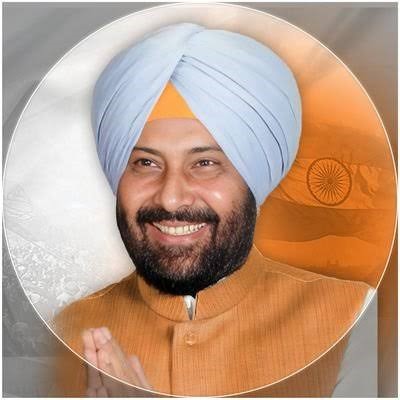
 The appointment of Kewal Singh Dhillon as the president of the Punjab unit of the Bharatiya Janata Party (BJP) marks a significant political experiment in the state. A veteran politician and former Congress leader, Dhillon’s elevation reflects the BJP’s attempt to broaden its appeal among Sikh voters and strengthen its position ahead of the 2027 Punjab Assembly elections. Yet, almost immediately after his appointment, media discussions have focused not only on his political experience but also on controversies surrounding his past and his ideological shift from Congress to BJP. The central question remains: despite these controversies, can he deliver for Punjab and his party?
Dhillon’s political journey has been anything but conventional. Born in Barnala district, he served as MLA from Barnala for two consecutive terms as a Congress leader before joining the BJP in 2022. His appointment is historically significant because he is among the first prominent Jat Sikh leaders to head the Punjab BJP, a party traditionally perceived as having a stronger urban Hindu base in the state. Political analysts view this move as an effort by the BJP to gain deeper roots in rural Punjab and among Sikh communities.
However, Dhillon’s transition from Congress to BJP during the post-farm laws period remains a source of criticism. Opponents allege that his ideological shift was driven more by political calculations than principles. In Punjab’s highly emotional political environment, party-switching often invites skepticism, especially when leaders move between parties with sharply differing political narratives. Critics argue that such transitions raise questions about ideological consistency, while supporters contend that political realignments are a common feature of democratic politics.
Another challenge facing Dhillon is the BJP’s image in Punjab. The party continues to face residual anger among sections of the farming community over the now-repealed farm laws. Although the central government withdrew the laws, rebuilding trust remains a difficult task. As a farmer himself, Dhillon has repeatedly emphasized farmers’ welfare and employment generation for youth, indicating that he intends to bridge this gap. He has publicly declared his vision of making Punjab “the best state in the world” and has projected confidence about the BJP’s prospects in 2027.
Dhillon’s age and political longevity are also subjects of debate. At 76, some critics question whether he represents generational change in Punjab politics. Yet, supporters argue that his decades of experience in both governance and organization provide him with the maturity required to navigate Punjab’s complex political landscape. His experience as both businessman and farmer gives him credibility on economic and agrarian issues—two areas central to Punjab’s future.
Since taking over as state president, Dhillon has attempted to position himself aggressively against the ruling Aam Aadmi Party government. He has criticized Chief Minister Bhagwant Mann on issues ranging from governance and unemployment to law and order. The BJP leadership, including Union Home Minister Amit Shah, has also signaled a renewed focus on Punjab, with plans to contest all 117 Assembly seats in the next election. This suggests that Dhillon enjoys considerable backing from the party’s central leadership.
Yet the larger challenge before him is organizational rather than rhetorical. Punjab remains one of the few states where the BJP has historically struggled to emerge as a dominant force independently. The decline of traditional parties such as the Shiromani Akali Dal presents an opportunity, but converting that opportunity into electoral success requires building a grassroots network, expanding rural outreach, and addressing concerns of farmers, youth, and religious communities. Dhillon’s ability to unite diverse factions within the Punjab BJP will be closely watched.
Whether Kewal Singh Dhillon succeeds will ultimately depend less on controversies and more on performance. Punjab’s electorate has increasingly shown a willingness to reward governance and punish complacency. If Dhillon can articulate a credible vision for agriculture, industry, employment, and social harmony, he may succeed in expanding the BJP’s footprint in the state. However, if controversies overshadow governance and the party fails to address lingering trust deficits, his tenure could become another missed opportunity in Punjab’s ever-changing political landscape.
In politics, controversies rarely disappear; they are either overcome through performance or magnified by failure. For Kewal Singh Dhillon, the coming months will determine whether he becomes the architect of a new BJP chapter in Punjab—or merely another leader constrained by the baggage of the past.
Referance:Economic Times,NDTV