
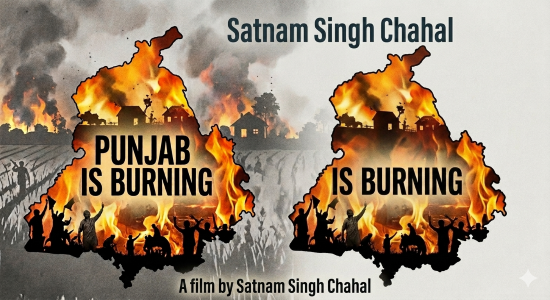
 Punjab has always been known as a land of hospitality, hard work, and brotherhood. For decades, people from different parts of India came to Punjab in search of employment, better wages, and a secure future. From farms to factories, construction sites to small businesses, migrant workers became part of Punjab’s economic system. Many local industries survived thanks to their labour and contributions. But in recent years, a growing tension has started developing between sections of local Punjabis and migrants coming from other states.
The issue has now become emotional, political, and social. In many towns and villages, residents openly express fear regarding rising crime, drug trafficking, thefts, violent incidents, and law-and-order problems. Whenever a serious crime occurs, rumours and anger spread quickly on social media, leading to a perception that outsiders are responsible for disturbing Punjab’s peace. This has created mistrust between communities and increased social division.
Many Punjabis argue that the state’s demographic and social structure is changing rapidly. They feel that large-scale migration without proper verification or monitoring has created pressure on jobs, housing, public services, and security systems. In cities like Ludhiana, Jalandhar, Amritsar, Mohali, and Patiala, locals often complain that some neighbourhoods have changed completely within a few years, creating communication gaps and cultural differences. For elderly residents and families already struggling with unemployment and drug-related problems, this change sometimes creates insecurity and anxiety.
At the same time, it is important to understand that blaming an entire migrant community for crime is neither fair nor practical. Thousands of migrant families living in Punjab are honest workers who wake up early every morning to earn a livelihood. Many have spent decades in Punjab, their children study in Punjabi schools, and they consider Punjab their home. Painting every migrant as a criminal can increase hatred and damage social harmony.
However, public concerns cannot simply be ignored either. Crime is a real issue, and people expect the government to maintain law and order. Locals want strict background verification systems, better policing, tenant registration, and stronger intelligence networks to identify criminal elements regardless of where they come from. The frustration among residents grows when governments appear inactive or dismiss public fears as mere politics.
Another major factor behind rising tensions is unemployment among local youth. Many Punjabis feel that while they are struggling with lack of jobs, addiction problems, and migration abroad, cheap labor from outside states is increasingly replacing local workers in multiple sectors. This economic insecurity sometimes turns into anger against migrants instead of forcing policymakers to address deeper structural issues in Punjab’s economy.
Political parties have also contributed to the situation. Instead of creating long-term employment strategies, improving education, controlling drugs, and strengthening industries, many leaders prefer emotional narratives that divide communities. Some use fear to gain votes, while others ignore public concerns entirely to avoid controversy. As a result, ordinary citizens remain trapped between fear, propaganda, and uncertainty.
Punjab’s history teaches an important lesson: division and hatred never bring stability. During difficult periods in the past, Punjab suffered enormously because communities stopped trusting each other. Today, the state again stands at a sensitive point where balance and wisdom are needed. Strict action against criminals is necessary, but innocent laborers should not become targets of collective blame.
The real challenge before Punjab is not simply migration. The larger challenge is governance. People want safer streets, stronger policing, employment opportunities, control over drugs and organized crime, and policies that protect both social harmony and public security. If authorities fail to act responsibly, tensions between locals and migrants may continue to grow and create deeper instability in society.
Punjab has always survived because of its spirit of courage and humanity. The state needs honest leadership, transparent law enforcement, and responsible public dialogue instead of fear-driven narratives. Only then can Punjab protect its identity, maintain peace, and ensure justice for everyone living on its soil.