
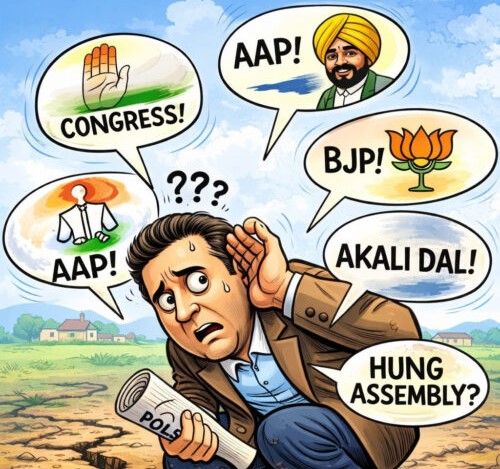
 Punjab today stands at a critical crossroads. While the state faces numerous pressing challenges, including unemployment, declining agricultural profitability, drug abuse, migration, deteriorating law and order, environmental degradation, and a shrinking industrial base, many citizens are increasingly asking whether these concerns are receiving the attention they deserve. Instead of witnessing comprehensive solutions to long-standing issues, Punjab continues to witness a growing dependence on borrowings, raising serious questions about the state’s financial health and future direction.
The latest development has once again brought the state’s debt burden into focus. In May 2026, the Punjab Government raised a fresh loan of ₹2,500 crore from the market. This came just weeks after the government had borrowed ₹4,000 crore in April 2026. Together, these borrowings have added ₹6,500 crore to Punjab’s debt burden in less than two months. While governments often resort to borrowing for developmental projects and infrastructure creation, concerns arise when debt continues to grow without visible improvements in the everyday lives of citizens.
The growing dependence on loans has led many economists and policy observers to question whether Punjab is entering a dangerous cycle of borrowing to meet existing obligations rather than investing in productive sectors capable of generating future revenue. Every new loan carries repayment obligations along with interest costs, which ultimately place additional pressure on future budgets. As debt servicing consumes a larger share of government revenue, fewer resources remain available for education, healthcare, infrastructure, agriculture, employment generation, and social welfare programs.
At the same time, Punjab faces several structural challenges that require urgent attention. Agriculture, which remains the backbone of the state’s economy, is under severe stress. Farmers continue to struggle with rising input costs, declining groundwater levels, soil degradation, and uncertainty regarding crop diversification. Despite repeated discussions about sustainable agricultural reforms, many farmers feel that practical solutions have been slow to materialize.
The industrial sector also faces significant challenges. Many entrepreneurs have voiced concerns regarding high power costs, competition from neighboring states, regulatory hurdles, and the migration of industries to regions offering better incentives. A weak industrial sector limits employment opportunities for Punjab’s youth, forcing many talented young people to seek opportunities abroad or in other parts of India. The continuing exodus of skilled youth represents not only a demographic challenge but also a loss of human capital that could otherwise contribute to Punjab’s development.
Law and order remains another area of public concern. Incidents involving organized crime, gang violence, extortion, and drug trafficking frequently dominate headlines. While law enforcement agencies continue their efforts, many citizens believe stronger and more sustained action is required to restore confidence and ensure public safety. A secure environment is essential not only for citizens but also for attracting investment and fostering economic growth.
Punjab is also experiencing significant demographic and social changes. The increasing migration of workers from other states has contributed to the state’s economy by filling labor shortages in agriculture, industry, and construction. However, the issue has also sparked debates regarding urban planning, social integration, pressure on public services, and long-term policy planning. These discussions require balanced and evidence-based approaches that address both economic needs and social concerns.
Environmental challenges further complicate Punjab’s future. Groundwater depletion continues at an alarming pace, while pollution in rivers and urban centers remains a major concern. Climate change is making weather patterns increasingly unpredictable, affecting agricultural productivity and rural livelihoods. Experts have repeatedly warned that environmental sustainability must become a central pillar of future development strategies if Punjab is to avoid more severe crises in the coming decades.
Against this backdrop, the state’s growing debt burden assumes even greater significance. Citizens naturally expect that borrowed funds will translate into visible improvements in infrastructure, economic opportunities, public services, and quality of life. Transparency regarding how borrowed money is being utilized becomes essential for maintaining public trust. People want to know whether these loans are being invested in productive assets that will generate future growth or merely being used to bridge fiscal gaps.
The central question being asked across Punjab is simple: What is the long-term vision for the state? Borrowing in itself is not necessarily problematic if it supports sustainable development and economic expansion. However, debt without a clear roadmap for growth can create significant risks for future generations. Punjab requires comprehensive policies that address agriculture, industry, employment, education, healthcare, environmental protection, and public safety in an integrated manner.
As the state’s debt continues to rise, the debate is no longer merely about numbers. It is about priorities, governance, accountability, and the future direction of Punjab. The people of Punjab deserve a clear understanding of how today’s borrowings will contribute to tomorrow’s prosperity. Until tangible progress is visible on the ground and major public concerns are effectively addressed, questions about the state’s direction are likely to grow louder.
The future of Punjab will not be determined by the amount it borrows, but by how effectively it addresses its challenges, utilizes its resources, and creates opportunities for its people.
“Disclaimer: The photographic elements used in the accompanying graphic are for symbolic and illustrative purposes only. The individuals depicted do not imply actual endorsement, involvement, or association with substance