
 Punjab today stands at a critical crossroads. The biggest question before the state is not only about economic growth or new projects, but about the kind of future we are creating for the coming generations. Development should never become an excuse to destroy nature, weaken agriculture, exploit water resources, or benefit only a small circle of influential people. Real progress is that which protects the environment, safeguards people’s rights, and ensures a secure future for the entire region.
For decades, Punjab has already paid a heavy price in the race for unchecked development. Excessive exploitation of groundwater, shrinking green cover, pollution of rivers and canals, and the continuous reduction of fertile agricultural land have created a dangerous imbalance. Villages that once represented prosperity are now facing environmental stress, health concerns, and uncertainty about future resources. Despite these warning signs, policies often continue to prioritise short-term gains over long-term sustainability.
The focus of government policies should not revolve around the interests of powerful businessmen, political groups, or influential individuals. Policies should be made keeping in mind the welfare of ordinary people, farmers, laborers, youth, and future generations. When forests are cut, fertile land is converted without proper planning, and water resources are exhausted, the damage does not remain limited to one project or one generation. The entire region suffers for decades.
Development that comes at the cost of nature cannot truly be called development. A government may announce large projects, industrial expansion, or infrastructure plans, but if these initiatives destroy ecological balance and threaten public welfare, then such progress is incomplete and dangerous. The real test of any government or bureaucracy is not how many projects it launches, but how responsibly it protects the long-term interests of the state and its people.
Unfortunately, public trust in many government decisions appears to be weakening. Increasingly, citizens, social activists, and organizations such as Public Action Committee are being forced to approach the courts in order to seek justice or challenge controversial decisions. In some cases there is relief, while in others there is disappointment, but the very fact that people repeatedly have to knock on the doors of the judiciary reflects a deeper crisis of confidence. A healthy democracy should function in a way where public concerns are heard through transparent governance and accountable institutions before matters reach the courts.
The growing feeling among the people is that many policies are drifting away from public welfare and becoming centered around the interests of a select few. When governance starts favoring influence over fairness, it creates imbalance in society. Such imbalance ultimately damages social harmony, weakens democratic institutions, and increases public frustration.
Punjab’s future cannot survive on political slogans alone. The state urgently needs policies based on environmental protection, sustainable agriculture, scientific planning, transparent governance, and genuine public participation. Rivers, forests, groundwater, and fertile land are not merely resources — they are the foundation of Punjab’s identity and survival.
If Punjab wishes to secure a stable future, then governments, bureaucracies, and policymakers must understand that nature is not an obstacle to development; it is the very basis of development. Protecting the environment and protecting public interest are not separate responsibilities — they are the same mission. Any model of growth that ignores this truth will eventually leave behind environmental destruction, social unrest, and economic instability.
The time has come for Punjab to redefine development. Progress should be measured not only by buildings and investments, but by clean water, healthy soil, protected forests, transparent governance, and the trust of the people. Only then can Punjab move toward a balanced and sustainable future.
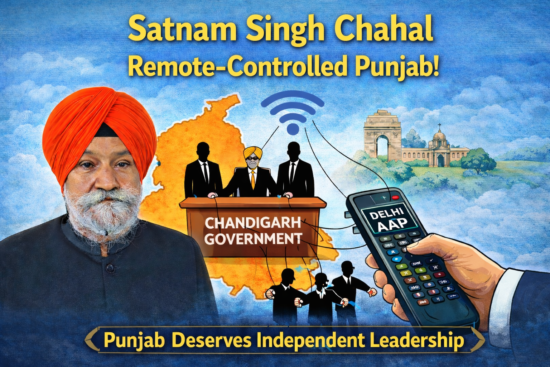
“Disclaimer: The photographic elements used in the accompanying graphic are for symbolic and illustrative purposes only. The individuals depicted do not imply actual endorsement, involvement, or association with substance