
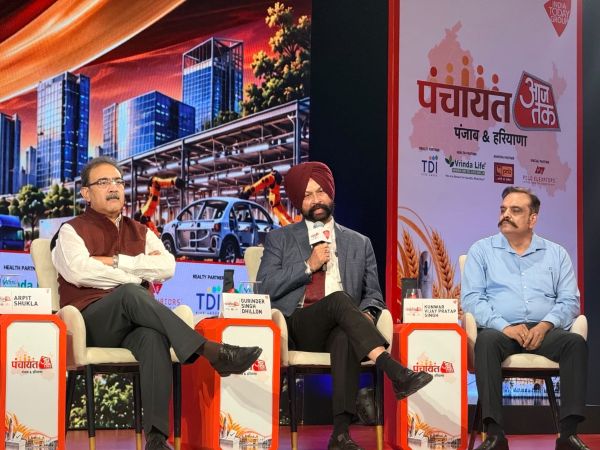
Punjab Outlook | News Analysis-Former senior IPS officer Gurinder Singh Dhillon has questioned the Punjab Police’s handling of a matter concerning Rajbir Ghuman, Officer on Special Duty (OSD), arguing that the authorities should have followed the legal procedure for obtaining prior government approval before initiating an inquiry.
In a public statement dated October 8, Dhillon said the matter originated with a letter sent by the Enforcement Directorate (ED) to the Punjab government in July 2026. He maintained that he had raised concerns about the legal handling of the case when he spoke to the media in July and August, warning that errors at the initial stage could complicate subsequent proceedings.
Dhillon specifically referred to Section 17A of the Prevention of Corruption Act, which provides for prior approval from the competent authority before a police officer conducts an inquiry or investigation into an alleged offence under the Act relating to a public servant’s official recommendations or decisions. He questioned why the Bureau of Investigation (BOI) within the Punjab Police began an inquiry instead of first approaching the state government for the requisite approval.
According to Dhillon, the police inquiry continued until the Punjab and Haryana High Court intervened. He asked why the BOI had not sent the necessary request to the government at the outset and questioned whether anyone had prevented the required procedure from being followed. He directed his questions towards the state’s political and administrative leadership, including the Chief Minister’s Office, the Director General of Police and the Chief Secretary.
Dhillon further argued that once the ED’s letter arrived in July, the police should have forwarded the matter to the Department of Home Affairs, Government of Punjab, through an official memorandum or demi-official letter, seeking a decision under Section 17A. In his assessment, the competent authority could then have examined the relevant record and decided whether to grant or refuse approval within a reasonable period, potentially within two weeks.
The controversy has taken another turn because, as Dhillon describes it, the High Court examined the files and records in a public interest litigation (PIL) and ordered the registration of an FIR for investigation. He questioned the position of an accused person now seeking relief under Section 17A after the matter had reached this stage through court intervention. He summed up the situation with a Punjabi metaphor: “After the dam has burst, people are discussing arrangements to stop the water.”
Dhillon’s comments raise important questions about procedural compliance, administrative responsibility and the timing of decisions in cases involving allegations against public officials. However, the legal implications of Section 17A depend on the precise allegations, the nature of the proposed inquiry, the applicable statutory requirements and the relevant court orders. The provision is not a blanket bar on every police inquiry involving a public servant; its application must be assessed in the circumstances of the particular case.
The key questions now are whether the required approval was sought at the appropriate stage, what steps the competent authority took after receiving the ED’s communication, and what exactly the High Court directed. The answers should emerge from the official correspondence, the court’s order and the investigation record.
At this stage, Dhillon’s statement represents his criticism of how the matter was handled. A definitive assessment of responsibility or any alleged wrongdoing must rest on verified documents and the findings of the competent authorities or courts.