
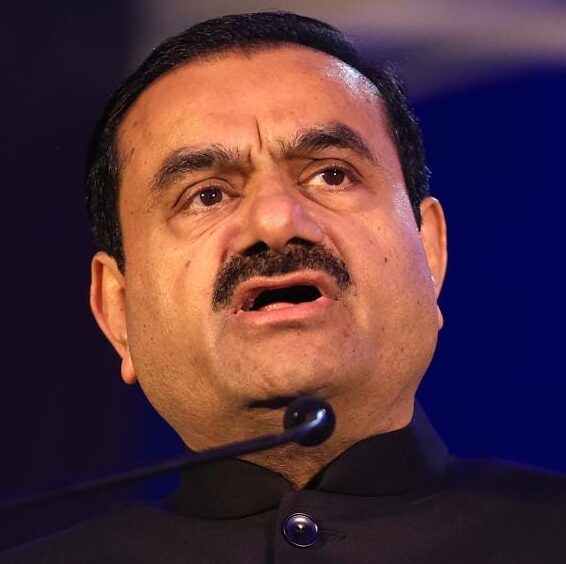
 In November 2025, Donald Trump Jr. made an unannounced stop in Ahmedabad. According to people familiar with the matter, cited by Bloomberg, he held a private meeting there with Gautam Adani, the ports-to-energy billionaire whose conglomerate is headquartered in that city. At the time, Adani was facing criminal charges in a United States federal court, charges he and his group have consistently denied.
Bloomberg reported this meeting today, on June 23, 2026. It had not been previously disclosed.
Six months after that Ahmedabad encounter, in May 2026, the Trump administration’s Department of Justice filed a motion to dismiss all criminal charges against Gautam Adani and his nephew Sagar Adani. A federal district judge granted the dismissal with prejudice, bringing the federal criminal proceedings to a permanent close. The charges, originally brought by the Biden-era DOJ in November 2024, had alleged securities fraud, wire fraud, conspiracy, and a $265-million bribery scheme involving Indian solar energy contracts and payments to government officials — allegations the Adani Group denied in their entirety.
This article attempts to set out what the public record shows, and what questions it leaves open.
The Charges
The original indictment, filed in the Eastern District of New York, accused Gautam Adani and associates of orchestrating a scheme to bribe Indian state officials to secure solar energy supply contracts, and of subsequently misrepresenting the legal situation to American investors. The Adani Group rejected these allegations categorically.
The charges nonetheless had measurable consequences. Adani’s net worth, then estimated at over $100 billion, declined visibly. International lenders and institutional partners reconsidered their exposure. Whatever their ultimate legal merit, the indictment carried significant real-world weight.
The Road to Dismissal
What followed between November 2024 and May 2026 is a matter of documented public record.
Following President Trump’s return to office in January 2025, Gautam Adani made several public gestures of goodwill toward the new administration. He spoke warmly of President Trump. His conglomerate announced a commitment to invest $10 billion in the United States, projected to generate 15,000 jobs.
On the legal side, Adani made notable changes to his defence team. He retained Robert J. Giuffra Jr. — one of President Trump’s personal attorneys — as lead counsel. According to reporting by The New York Times, Giuffra subsequently arranged a meeting at the DOJ’s Washington headquarters, at which the possibility of a $10-billion US investment was raised in the context of the ongoing case. Separately, Boris Epshteyn, a political adviser closely associated with President Trump, was also retained, though he did not appear formally in legal filings and did not attend meetings with prosecutors.
In May 2026, the DOJ moved to drop all criminal charges. Its formal communication to the court was brief: “The Department of Justice has reviewed this case and has decided, in its prosecutorial discretion, not to devote further resources to these criminal charges against individual defendants.”
Prosecutorial discretion is a recognised and legitimate basis for discontinuing a case. The DOJ offered no further elaboration on the evidential or legal reasoning behind its decision.
Alongside the criminal dismissal, the SEC settled its parallel civil fraud case, with Gautam Adani and Sagar Adani agreeing to pay civil penalties of $6 million and $12 million respectively — subject to court approval. The US Treasury separately announced a $275-million settlement with the Adani Group over alleged sanctions-related matters involving Iran.
The Timing Question
Bloomberg’s June 23, 2026 report adds a previously unknown element to this sequence: that Donald Trump Jr. had held a private, undisclosed meeting with Gautam Adani in Ahmedabad in November 2025, while the criminal case was active.
A spokesperson for Trump Jr. told Bloomberg that the meeting had “zero to do” with the DOJ’s subsequent decision. That statement is on the record and is part of the factual picture.
The chronology, taken as a whole, is now in the public domain: a criminal indictment in November 2024; an undisclosed private meeting in November 2025; changes to the legal team that brought in attorneys personally connected to the President; a $10-billion investment commitment; and a dismissal with prejudice in May 2026. Each of these events is individually documented. How they relate to one another — whether there is any causal connection, and if so of what nature — is not established by the available record. What the record does establish is that these events occurred in the sequence described. In matters of public interest involving prosecutorial decisions, the sequence itself is a legitimate subject for public scrutiny, regardless of what conclusions, if any, that scrutiny ultimately supports.
The Indian Dimension
This story has significance beyond Washington. Gautam Adani is among the most prominent figures in Indian corporate life, with an infrastructure footprint — ports, airports, power, gas, roads — that intersects extensively with the Indian state.
When US media raised the Adani case at a bilateral press event, the Indian government’s response was brief: “individual matter.” The government did not engage with the substance of the proceedings.
The dismissal is now permanent. Adani has since recovered his position among Asia’s wealthiest individuals. His group’s stocks have stabilised. The episode, from an Indian institutional standpoint, appears to have been treated as concluded.
A Familiar Pattern
This is not the first time allegations of this scale against the Adani Group have passed through formal institutional processes. In January 2023, the American short-seller Hindenburg Research published a report accusing the Group of stock manipulation and accounting fraud — allegations the Group categorically denied. The Supreme Court of India took cognisance, appointed an expert committee, and directed SEBI to investigate. SEBI issued a clean chit; the Supreme Court, in January 2024, declined to transfer the investigation to a Special Investigation Team, finding no established regulatory failure. Some analysts and opposition figures questioned whether the inquiry had been sufficiently comprehensive; others accepted the institutional outcome as final. The Hindenburg firm itself ceased operations in January 2025. The present article takes no position on the merits of either episode. What is simply observable is that, in both instances, formal allegations of considerable gravity were followed by institutional processes that arrived at closure. Whether those processes were adequate is a question each reader will answer according to their own assessment of the evidence and the institutions involved.
What This Means for the Rule of Law
The broader question raised by this episode is one of institutional design rather than individual conduct.
The United States Department of Justice has, in this case, exercised its discretion to discontinue a major securities fraud prosecution without detailed public explanation. That discretion is legally available to it. The question that governance scholars and legal commentators are beginning to ask is whether the exercise of such discretion, in cases involving significant political adjacency, requires a higher standard of public justification than a single-sentence letter to the court.
This is not a question unique to this case. It is a structural question about the relationship between prosecutorial independence and executive influence — one that democratic systems periodically have to confront and resolve. The Adani case has brought it into sharp focus, in part because of the visibility of the parties involved and in part because of the investment-linked context in which the dismissal occurred.
Those who have long regarded the American federal prosecution system as among the more insulated in the world will find the episode, at minimum, worthy of careful reflection.
A Note on What We Do Not Know
Fairness requires that the limits of the available record be stated plainly.
We do not know what was discussed at the Ahmedabad meeting. We do not know whether Donald Trump Jr. had any role, direct or indirect, in the subsequent trajectory of the case. We do not know the internal deliberations within the DOJ that produced the decision to seek dismissal. The stated basis — prosecutorial discretion and resource allocation — is a recognised legal ground.
The denial by Trump Jr.’s spokesperson is on record. The DOJ’s stated rationale is on record. A federal court granted the dismissal. These are the established facts.
The unanswered questions — about the content of the Ahmedabad meeting, about the relationship between the investment commitment and the prosecutorial decision, about the internal process within the DOJ — are questions that journalism, legislative oversight, and judicial review exist precisely to pursue. Whether they will be pursued with the rigour the public interest demands remains to be seen.
Summing up
In November 2025, the son of the President of the United States held a private, previously undisclosed meeting in Ahmedabad with a businessman who was, at that time, facing criminal charges in a US federal court. Six months later, those charges were permanently dismissed.
The surrounding circumstances — a new legal team with direct personal connections to the President, a $10-billion investment commitment made in the context of ongoing proceedings, and a dismissal justified in a single sentence — are all part of the documented public record. They do not, in themselves, establish wrongdoing by any party. They do, however, constitute a factual picture that the public in any functioning democracy is entitled to examine and to question.
The meeting, the dismissal, and the chain of documented events between them now belong to the public domain. What institutions — investigative, legislative, judicial — choose to do with that record is t