

For the next five days, Raj Jit Singh Hundal remains in the custody of the Punjab Police investigators. On the evening of Thursday, 24 September 2026, the Anti-Narcotics Task Force (ANTF) produced the dismissed Assistant Inspector General before the Civil Judge (Junior Division), Mohali, in an NDPS Act case and asked for ten days of police remand. The court gave five. He is in police custody, not judicial custody, and the coming week turns on that difference.
How he came to be in that courtroom begins in Delhi, on 10 September 2026. Senior counsel for Hundal told a Supreme Court Bench of Justices M.M. Sundresh and Augustine George Masih that his client was willing to surrender. The Court told him to do so and listed the case for 1 October.
Fourteen days later, on the morning of 24 September, the Punjab Police announced that he had been apprehended from a house in Darshan Singh Nagar, Patiala, under Police Station Anaj Mandi. DGP Gaurav Yadav credited sustained technical and financial investigation by the ANTF.
The reader may choose the verb. His lawyer announced in the country’s highest court that he would surrender, and a fortnight later he was found at an address in Patiala. That is not a man run to ground in the ordinary sense. Nor, to be fair to the ANTF, did he walk into a police station with his hands raised. The thana munshi (the head constable who keeps the station’s registers) would settle the argument in two words, without taking sides: pesh ho gaya. He presented himself, or he was presented; in the vernacular the phrase holds both readings, and the choice matters less than what happened that evening.
The remand matters more than the arrest. Police custody is the only stage at which investigators can sit him across the table, put the promotion files, the NDPS case records and the bank trail before him, and take him to the places and papers his answers point to. Once the five days run out, around 29 September, he passes into judicial custody, and the questioning stops unless a court allows more. The ANTF asked for ten days and got half, so any extension will have to be earned by showing progress. The remand also covers only the NDPS case. The Vigilance Bureau’s assets case and the extortion case will each need their own formal arrest and remand before he can be questioned in them. The Supreme Court sits again on 1 October, two days after the remand runs out. The clock is short.
Sealed Covers, Unsealed Consequences
To see why five days matter, go back nine years.
First, the praise. By most accounts he was regarded as an effective district police chief. In August 2013 he received the Police Medal for Meritorious Service, and after the STF had begun questioning him he was recommended for the medal again, for his role in solving a series of killings. That second recommendation was dropped after the press reported that it had been made for an officer by then under a cloud. In 2018 one group of senior officers was still certifying him as honest while another wanted him investigated.
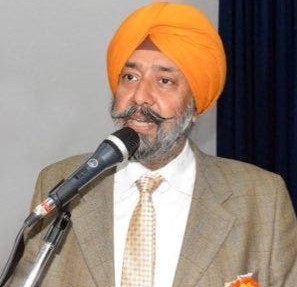
In June 2017 the then Special Task Force arrested Inspector Inderjit Singh, in-charge of the CIA staff (the Crime Investigation Agency, the district’s plain-clothes detective wing). His questioning pointed upward, to the officer who had been his SSP in Tarn Taran and later in Moga. The Punjab and Haryana High Court had been monitoring drug proceedings for years, and in 2018 its special investigation team, headed by DGP Siddharth Chattopadhyaya, submitted its reports.
Then the reports went into sealed covers, and there they stayed for nearly five years.
When the covers were opened in April 2023, the State moved within days. Hundal was dismissed on 17 April 2023. The dismissal order recorded that more than fifty samples in NDPS cases had failed during his Tarn Taran tenure, and described this as an effort to “hijack the government machinery”. The SIT material also spoke of a double promotion pushed through for the inspector despite pending cases, and of a sudden swelling of the family’s assets from 2013 onward.
Within a month there were three cases against him. The first was an STF case under the Narcotic Drugs and Psychotropic Substances Act, 1985 and the Indian Penal Code. The second was a Vigilance Bureau case of disproportionate assets under the Prevention of Corruption Act, 1988. The third was a further STF case alleging extortion by writing innocent people into drug cases.
When Hundal was added as a co-accused in April 2023, the provisions reported against him in the first case included, besides conspiracy, extortion and the framing of an incorrect record by a public servant, Section 59 of the NDPS Act. That section is the Act’s own offence for an officer who fails in his duty or connives at a breach of the law he is meant to enforce. Two qualifications apply. Sections named in an FIR are the investigator’s first reading of the facts, and they are often added to or dropped by the time a charge-sheet is filed and charges are framed. And no court has yet found that he connived at anything. Still, the section chosen describes the case. In substance, he is accused of shielding a subordinate who allegedly trafficked in heroin, and Section 59 is the offence the law reserves for the uniform.
One footnote belongs in any fair account. Chattopadhyaya’s individual report, which pointed at officers above Hundal, was later set aside by the High Court as going beyond the SIT’s mandate. That was a ruling on scope, not a finding on the merits. Nobody has since tested those allegations on evidence.
Proclaimed in August, Protected in October
In August 2023 a Division Bench of the High Court refused him anticipatory bail, holding that the allegations were serious and that custodial interrogation would be necessary to find out how he had operated with his subordinates. He did not appear before the Mohali court by the date fixed, and was declared a proclaimed offender.
On 6 October 2023 the Supreme Court granted him anticipatory bail in the STF drug case and directed him to join the investigation. This was rare. The settled position, stated in Lavesh v. State (NCT of Delhi) and repeated in Prem Shankar Prasad v. State of Bihar, is that a proclaimed offender is ordinarily not entitled to protection before arrest. A man who has defied the court’s summons has little claim on the court’s indulgence. The Supreme Court nonetheless has the power to depart from the ordinary rule, and it did.
Hundal, to his credit, used the protection as it was meant to be used, and appeared before the investigators.
He did so for about a fortnight.
The Evening of 20 October
On 20 October 2023, Justice Anoop Chitkara of the High Court dismissed his anticipatory bail plea in the Vigilance Bureau’s assets case. The judge noted that transactions of over Rs 13 crore stood unexplained, and that for a public servant such sums pointed to criminal misconduct. That evening Hundal stopped appearing before the investigators. He was not seen at any official door for nearly three years. In December 2023 he withdrew his bail plea in the extortion case as well.
The Supreme Court’s umbrella covered one case. The High Court refused shelter in another. The moment it was clear the umbrella would not keep off the rain in the second case, he walked out into the dark. A proclaimed offender had received the most generous relief the criminal law offers, honoured it while it suited him, and left the moment it did not.
The petition that finally brought him back to the Supreme Court asked, with some irony, for the investigation to be moved from the Punjab Police to another agency, on the plea that the state police would not investigate him fairly. That petition challenges a July 2026 order of the High Court. While telling him to surrender, the Supreme Court left him free to file an appropriate application once he had done so. The question returns on 1 October.
A Representative Case, Not a Verdict
Hundal has not been convicted of anything. The drug case, the extortion case and the assets case are allegations. In each he is entitled to the presumption of innocence and to a fair trial. His claim to be a scapegoat in a feud between groups of senior officers may even contain some truth, because Punjab’s police leadership did fight an open war over this very SIT in 2018.
Punjab’s vernacular YouTube channels have already moved past him. They are baying for the blood of senior officers of DGP rank, some named and some left to the viewer’s imagination, and of former ministers, alleged to have been the patrons in whose game Hundal was a pawn, or at best a bishop. They want the king, and the wazir who guarded him, brought to book. The appetite is understandable after nine years of sealed covers and slow files. It is not evidence. A name on a thumbnail is not a name in a charge-sheet, and a trial by camera does the guilty a favour, because it hands them the plea of prejudice. If there were patrons, the road to them runs through the remand room, the bank trail and the approver’s statement in the court record (a former DSP co-accused in the case was granted immunity to turn approver), and the due process of law must be allowed to travel that road at its own pace.
The case deserves attention because it is representative. One career shows every stage at which the system can fail. There is the promotion recommended despite pending cases, the report sealed for five years, and the absconder no one could trace for three. And there is the trail that stops, again and again, at a middle rank.
The Thana as a Toll Plaza
The image that fits, to my mind, is the toll plaza. On a highway you pay to pass. In a police station under a corrupt SHO, the FIR itself becomes the barrier. The citizen pays to stay out of one, to have his name taken out of one, or to have one settled. The heroin is incidental. The real currency is the power to implicate.
Consider three recent cases, all still at the stage of allegation.
In October 2025 the CBI arrested Ropar Range DIG Harcharan Singh Bhullar on a charge that he had demanded a bribe of Rs 8 lakh, besides monthly payments, through a middleman for settling a 2023 FIR registered against a Mandi Gobindgarh scrap dealer. The searches that followed reportedly turned up about Rs 5 crore in cash, 1.5 kg of gold and a clutch of high-end watches.
In July 2026 Inspector Gurinderjit Singh Nagra, SHO of Tanda in Hoshiarpur district, was named in an American indictment. The FBI alleges that a US-based member of the Bhagwanpuria gang passed him the details of three Punjab residents and told him to extort money from their relatives in the United States. The threat was to implicate the three in the January 2026 murder of AAP leader Balwinder Singh, a case Nagra was himself supervising. The Punjab Police then arrested him, alleging that he had extorted about Rs 16 lakh from a US-based family.
The same month, a Punjab Police Sub-Inspector was arrested in Tarn Taran district with 300 grams of heroin and about Rs 1.27 lakh in suspected drug money. Tarn Taran was Hundal’s old district.
Each of them was caught from outside. The CBI caught the DIG. The FBI caught the SHO, by reading intercepted messages on another continent. The High Court’s SIT caught the SSP, and its findings then sat in a sealed cover for five years. In none of these cases did the Punjab Police’s own internal vigilance raise the first flag. That includes the Vigilance wing, the range DIG and the SSP’s office.
Fairness demands the other half of the ledger. Detection is one test of a police force; response is another, and on the second the Punjab Police under DGP Gaurav Yadav have not flinched. Within days of the FBI’s charges becoming public, Nagra was withdrawn from the Tanda police station and attached to the Police Lines, and an IPS officer from outside the district was asked to establish the facts and trace the victims the FBI had cited. The inspector was then arrested on evidence gathered by his own department. In Hundal’s case the ANTF kept the file alive for three years. It issued a look-out circular, moved to attach family property and pursued the patient financial tracing the DGP spoke of on Thursday, when it would have been easy to let a dismissed officer’s file gather dust. A force that arrests its own men, on its own evidence, deserves to be told so. The trouble lies upstream. The first alarm should not have to sound in Washington, or be raised by the CBI.
Yudh Nashian Virudh, and Within
The Punjab Government’s campaign against drugs, Yudh Nashian Virudh, is real, and its arrests and seizures should not be waved away. The Hundal arrest will be presented as the campaign’s trophy, and with some justice.
A war, however, has two fronts. The first runs through villages and the border belt. The second runs through thanas, CIA staffs and range offices, and a campaign that fights only on the first front cannot win.
Four things should follow.
The five days of remand, and any extension, should be used to ask not only what Hundal did, but who promoted him, who posted him and who protected him.
The assets case deserves equal weight. The Rs 13 crore is recorded on paper, and paper does not turn hostile.
On 1 October the State should tell the Supreme Court, on affidavit, what it did for three years to find a man who was finally found in Patiala.
The State should stop waiting for the CBI and the FBI. Every officer already files an annual return of immovable property (the yearly statement of land and houses held by the officer and family). Those returns should be read, not merely filed. Where an asset appears suddenly, even one said to have come by will from a distant relative, the bequest should be investigated thoroughly. The State should also publish, district by district, how many NDPS samples failed in the last five years.
Hundal asked the Supreme Court to take his case out of the Punjab Police’s hands because he did not trust them. The people of Punjab are entitled to ask the Punjab Police to show, in this very case, that they can be trusted with it.