
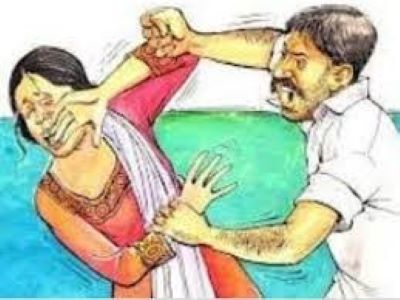
 India is a land that worships the feminine Durga, Saraswati, Lakshmi yet for millions of women across the country, the reality on the ground is one of fear, violence, and an agonizing wait for justice. The story of atrocities against women in India is not a new chapter; it is a wound that runs centuries deep, cutting across caste, class, religion, and geography. It is the story of daughters lost to female infanticide before they could take their first breath, of brides set ablaze over dowry demands, of survivors shamed into silence by the very systems meant to protect them. Yet it is also and this must be said with equal force the story of an awakening. Of millions of Indians who have taken to the streets, drafted new laws, and refused to look away. This is our reckoning, and it demands to be told in full.
1978 — The Mathura Rape Case: The Black Day That Started It All
The journey of women’s rights in India’s legal history must begin here. In 1972, a young tribal girl named Mathura was raped by two police constables inside a police station in Maharashtra. When the case finally reached the Supreme Court in 1979, the judgment shocked the nation the court acquitted the accused, questioning the girl’s consent based on the fact that she showed no injuries. A tribal girl, Mathura, was raped by police at a station. The Supreme Court ruling led to outrage because it questioned her consent, and this sparked legal reforms including presumptions favoring the victim and expansion of custodial rape definitions. The LawGist Women’s groups erupted in protest. The decision of the bench was highly criticized and condemned, leading to a huge public outcry and protest against the laws of the country, and the day was regarded as the black day in the history of the empowerment of women. iPleaders The Mathura case lit the first real fire under India’s women’s rights movement and forced Parliament to amend the Evidence Act to shift the burden of proof in rape cases.
1997 — Vishakha Judgment: Women’s Safety at the Workplace
In 1992, social worker Bhanwari Devi of Rajasthan was gang-raped by upper-caste men for trying to prevent a child marriage. Her case went largely unpunished, but the women’s rights organizations who supported her took the fight to the Supreme Court. In 1997, the Supreme Court delivered the landmark Vishakha judgment, which for the first time established legal guidelines to protect women from sexual harassment in the workplace. The POSH Act, which addresses sexual harassment faced by women in the workplace, is based on the Vishakha guidelines established by the Supreme Court in the case of Vishakha & Others v. State of Rajasthan, 1997, which addressed workplace harassment. This judgment was a watershed it recognized that violence against women did not end at the door of the home but followed them into offices and institutions as well.
2005 — The Domestic Violence Act: A Shield for the Home
For centuries, what happened inside the four walls of a home was considered a private matter, beyond the reach of the law. The Protection of Women from Domestic Violence Act, 2005 shattered that fiction. The Protection of Women from Domestic Violence Act, 2005 provides support for women victims of domestic violence, including shelter and medical facilities, with mandatory Protection Officers. This was a historic recognition that the home — the place a woman is supposed to feel safest is often where she is most in danger. Even with this law on the books, a dowry death is the murder or suicide of a married woman caused by a dispute over her dowry. In some cases, husbands and in-laws will attempt to extort a greater dowry through continuous harassment and torture which sometimes results in the wife committing suicide. Wikipedia According to the National Crime Records Bureau data, 6,589 dowry deaths were registered in the year 2021 all over India. Wikipedia The law existed, but the crime did not stop.
December 16, 2012 Nirbhaya: The Night India Woke Up
No single event in modern Indian history galvanized public conscience around women’s safety more completely than the brutal gang rape and murder of a 23-year-old physiotherapy student in Delhi on the night of December 16, 2012. The assault took place when Jyoti Singh, a physical therapy intern, was beaten, gang raped, and tortured in a private bus in which she was travelling with her friend. There were six other men in the bus, including the driver, all of whom raped the woman and beat her friend. She was rushed to Safdarjung Hospital in Delhi for treatment and died from her injuries two days later after being transferred to a hospital in Singapore. Wikipedia Since Indian law does not allow the press to publish a rape victim’s name, the victim was widely known as Nirbhaya, meaning “fearless”, and her struggle and death became a symbol of women’s resistance to rape around the world. Wikipedia Thousands poured into the streets of Delhi and cities across India, demanding accountability, justice, and a complete overhaul of how India treats its women. The government was shaken to its core.
2013 — The Law Responds: Criminal Law Amendment Act
The nationwide protest after Nirbhaya was too loud to ignore. The government constituted the Justice Verma Committee, which consulted with legal experts, women’s rights activists, and the public on a massive scale. The Justice Verma Committee led to the Criminal Law (Amendment) Act, 2013, which expanded the IPC’s Section 375 definition, introduced harsher punishments including death in aggravated cases, fast-track courts, and survivor rights. The LawGist For the first time, offences like stalking and voyeurism were made criminal. The definition of rape was broadened significantly. Fast-track courts were mandated for sexual assault cases. It was the most sweeping reform of India’s rape laws since independence — and it was born entirely from the anger and anguish of ordinary citizens who had had enough.
August 2013 — Shakti Mills Gang Rape, Mumbai
Less than a year after Nirbhaya, the country was shocked again. On August 22, 2013, five men, including a juvenile, raped a 22-year-old photojournalist when she had gone to the deserted Shakti Mills compound in South Mumbai with a male colleague on an assignment. TheQuint A Mumbai sessions court, on March 20, 2014, convicted all five adults accused in both cases, and on April 4, 2014, the court awarded the death penalty to the three repeat offenders. TheQuint The Shakti Mills case was significant because it was the first in India where the newly amended law the direct product of Nirbhaya’s sacrifice was invoked to sentence repeat rapists to death.
January 2018 — Kathua: The Darkest Story of All
If Nirbhaya shook India, the Kathua case in 2018 broke its heart. The Kathua rape case involved the abduction, gang rape, and murder of an 8-year-old girl, Asifa Bano, by six men and a juvenile, in January 2018 in the Rasana village near Kathua in Jammu and Kashmir. The victim belonged to the nomadic Bakarwal community. She disappeared for a week before her body was discovered by the villagers a kilometre away from the village. Thelawwaywithlawyers The case exposed the most horrifying intersection of gender violence, caste hatred, and communal prejudice. The 2018 Kathua rape case involved the abduction, gang rape and murder of an 8-year-old Muslim girl by seven men near Kathua in Jammu and Kashmir. Arab News The country watched in horror as political forces initially attempted to protect the accused. Nationwide candlelight vigils were held. The case became a symbol of how children — especially those from marginalized communities — are among the most vulnerable victims of gender-based violence in India.
2017–2019 — The Unnao Rape Case: Power Protecting the Powerful
The Unnao case revealed a different and equally dangerous dimension of the problem — what happens when the perpetrator is a powerful politician. A 17-year-old girl was gang-raped on June 4, 2017 in Unnao, Uttar Pradesh. The survivor tried to immolate herself outside the residence of the Chief Minister seeking justice. TheQuint A minor was raped by a BJP MLA; the victim’s family later faced further violence. The accused was convicted and sentenced to life in 2019. The LawGist The Unnao case illustrated the systemic reality that when the perpetrator has political connections, the survivor and her family face not only the trauma of the original crime, but additional violence, intimidation, and obstruction of justice. It took the survivor immolating herself in public just to be heard.
September 2020 — Hathras: Caste, Gender, and the Violence of Silence
The Hathras case in September 2020 brought together all of India’s most painful social failures — caste discrimination, gender violence, and a state apparatus that seemed more interested in covering up than delivering justice. In 2020, a 19-year-old Dalit woman was gang raped in the Hathras district of Uttar Pradesh by four upper-caste men. She died two weeks later in a Delhi hospital with her spinal cord severely damaged. Arab News What followed was outrageous: the case gained attention in 2020 due to the forceful cremation of the victim by the Uttar Pradesh Police, sparking public outcry. Thelawwaywithlawyers Police cremated the victim’s body in the dead of night, without the family’s consent, destroying potential evidence and denying the girl’s family the right to mourn her in dignity. In the Hathras gang rape and murder case, the prime accused was sentenced to life imprisonment by a court in Uttar Pradesh, but the other three accused were acquitted of all charges. Thelawwaywithlawyers The partial acquittal was yet another reminder of how the justice system continues to fail the most vulnerable.
The individual cases above are not aberrations. They are the visible peaks of a vast submerged crisis. The National Crime Records Bureau reported 445,256 cases of crime against women in 2022. From 2018 to 2022, reported crimes against women rose by 12.9%, reflecting both increased incidents and improved reporting. Drishti IAS Put differently, the Women and Men in India 2023 report shows a rise from 359,849 cases in 2017 to over 445,000 in 2022, averaging 1,220 cases daily, and averaging 51 First Information Reports per hour. Drishti IAS The most common crimes are not strangers in dark alleys they are crimes committed inside homes and families. The most common crimes include cruelty by husbands or in-laws at 31.4%, kidnapping and abduction at 19.2%, assault to outrage modesty at 18.7%, and rape at 7.1%. Drishti IAS
Beyond the reported numbers lies a far larger hidden reality. The National Family Health Survey-5 found that nearly one-third of women aged 15–49 in India have experienced some form of violence. Drishti IAS And despite tougher laws, conviction rates for rape have remained low, fluctuating between 27% and 28% from 2018 to 2022. Drishti IAS That means roughly three out of four accused rapists walk free. In India, marital rape is not a criminal offense. India is one of fifty countries that have not yet outlawed marital rape. According to surveys, 20% of Indian men admit to forcing their wives or partners to have sex. Wikipedia
While crimes against all women demand attention, the most marginalized women face a doubly compounded vulnerability. Dalit and tribal women are targeted not only because of their gender, but because of their caste. Cases documented by India’s National Commission for Women, local and national non-governmental women’s rights organizations, and the press reveal a pattern of impunity in attacks on women consistent with findings that in all cases of attacks on documented women, the accused state and private actors escaped punishment; in most cases, attacks were neither investigated nor prosecuted. Human Rights Watch The Hathras and Kathua cases were not isolated incidents. They were part of a pattern in which the most powerless women in society bear the heaviest burden of violence and receive the least justice in return.
Despite some progress stronger laws, fast-track courts, a more vocal public the fundamental situation remains dire. Data from India’s National Crime Records Bureau shows that nearly 430,000 cases of crime against women were reported in 2021, over 40 percent more than a decade earlier. The number is likely to be just the tip of the iceberg as the prevalence of reporting gender-based violence in India remains one of the world’s lowest. Arab News According to the Georgetown Institute 2023 Women Peace and Security Index, India scored 0.595 out of 1 point, placing it at rank 128 among 177 countries in terms of women’s safety.
Laws have been rewritten. Movements have risen. Conversations have started. But as women’s rights activists remind us, until the culture changes until the boy is taught from childhood to respect the girl, until the police officer sees the survivor as a victim and not a suspect, until the court moves swiftly and without bias the laws will remain only paper shields.
The truth is uncomfortable but necessary: India cannot call itself a great nation while its daughters live in fear. Women are not a protected species or a fragile object they are equal citizens with an absolute, unconditional right to dignity, safety, and justice. Every Indian who truly believes this must act on it. Report crimes. Support survivors. Hold institutions accountable. Raise boys who respect girls. Demand that politicians and police serve all citizens equally, regardless of gender, caste, or power.
The women of India have shown extraordinary courage from Mathura who faced a hostile Supreme Court, to Nirbhaya who sought justice with her dying breath, to the Hathras mother who screamed her grief into the night sky while her daughter’s body was taken from her. They did not choose to be symbols. They chose to be human. The least this nation can do is choose to stand with them.”Until the dignity of every woman is sacred, the freedom of every citizen is incomplete.”
Article compiled from NCRB data, legal records, and documented case histories | Published April 25, 2026