
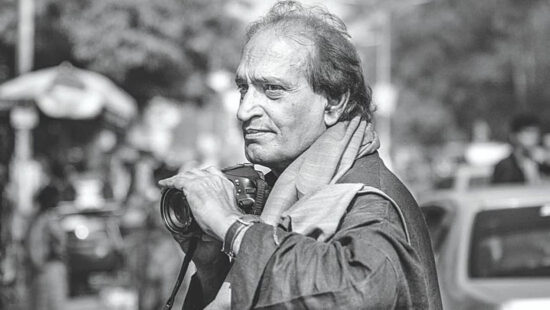
Some deaths feel like the dimming of a public light. Raghu Rai’s is one of them. He died in New Delhi on 26 April 2026 at the age of 83, after a long and punishing battle with cancer that had shadowed the last two years of his life. He had first been diagnosed with prostate cancer; later, the illness spread, and age-related complications made the final stretch harder still. Yet even in death, it is difficult to think of him as absent, because few artists have entered India’s collective imagination as deeply as he did.
To say that Raghu Rai was a great photographer is true, but insufficient. He was one of those rare figures who alter the way a country sees itself. He did not merely take photographs of India; he gave India back its own face — lined, luminous, tragic, comic, exhausted, holy, bewildered, resilient. He made us look again at what habit had taught us to ignore.
A Son of Punjab
For those of us who instinctively look for the roots of temperament, it matters that Raghu Rai was born on 18 December 1942 in Jhang, in undivided Punjab, now in Pakistan. He belonged, therefore, to that generation for whom geography was never just geography. Punjab was not merely a place of birth; it was a civilisational wound, a memory split by Partition, a homeland carried forward in fragments of speech, habit, temperament and grief. In Rai’s work, one can sense that inheritance not as a slogan, but as a sensibility.
There was something deeply Punjabi in the emotional temperature of his gaze. It had warmth without softness, feeling without display, intimacy without intrusion. He looked at human beings not as specimens but as presences. Even when he photographed public catastrophe, he did not reduce people to symbols of suffering. He preserved their human density. That, too, may have come from the old Punjabi instinct: to recognise that sorrow and vitality often live side by side.
The Camera as Conscience
Many photographers document. A few bear witness. Fewer still become a conscience. Raghu Rai, at his best, did all three. He began taking photographs in the mid-1960s, joined The Statesman, later worked independently, and eventually became director of photography at India Today from 1982 to 1992. But career chronology, though necessary, does not really explain him.
What explains him is the moral force of the image. Rai’s photographs were never only about composition, though his sense of frame could be astonishing. They were about attention — and attention, in the highest artistic sense, is a form of ethics. To look properly is to refuse indifference. Raghu Rai understood that. His camera did not flatter India. Nor did it sneer at it. It stayed with it.
The Nation in His Frames
He photographed prime ministers and paupers, saints and survivors, cities and ruins, ceremonies and silences. He saw the theatre of Indian public life, but he also saw its aftertaste — the loneliness after spectacle, the fatigue beneath official power, the ordinary dignity that survives beneath neglect. That is why his images endure. They are not records alone; they are recognitions.
His work on the Bangladesh war gave him early distinction, and the Padma Shri followed in the early 1970s. Henri Cartier-Bresson, impressed by his work, nominated him to Magnum Photos in 1977, a rare acknowledgment of international stature. Yet perhaps no body of work is more searingly tied to his legacy than his photographs of the Bhopal gas disaster, images that forced India — and the world — to confront suffering stripped of euphemism. Those pictures were not only journalistic triumphs. They were moral indictments.
He Did Not Look Away
That may be the simplest and truest thing to say about Raghu Rai: he did not look away. In a society crowded with distraction, sentimentality, and selective blindness, he insisted on seeing. He saw beauty, yes, but not as decoration. He saw pain, but not as spectacle. He saw power, but never as self-justifying. His greatest photographs carry within them an unusual doubleness: tenderness and severity, lyricism and accusation.
That is why so many of his images remain lodged in memory even when one does not immediately recall the date, place, or formal title of the photograph. The image survives because it contains not only an event, but an encounter. One feels, looking at his work, that the photographer was present not merely in body but in conscience.
The Private World Beside the Public Man
There is also something quietly moving in the family world around him. Public biographical accounts state that Raghu Rai was first married to journalist Usha Rai, and that they had children including Nitin Rai and Lagan Rai. Nitin Rai’s own career in photography suggests that for Raghu Rai, the image was not just profession but inheritance.
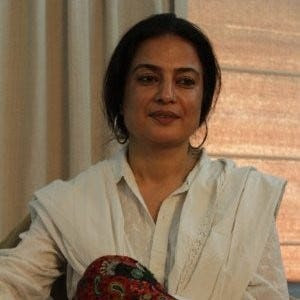
Later in life, he shared his world with Gurmeet Sangha Rai, an eminent conservation architect and heritage practitioner of great distinction, who remained his wife and companion till his last breath. There is a certain beauty in that companionship. He worked to preserve India in light and shadow; she worked to preserve it in brick, stone, memory and form across the country, with a special focus on the crumbling heritage of Punjab. It feels less like coincidence than a quiet convergence of callings.
Their daughters, Avani and Purvai, are also identified in public sources connected with the family, and Avani Rai in particular has made her own place in photography and film. One cannot help but feel that the household itself must have been rich with looking, thinking, remembering — a household in which art was not ornament, but atmosphere.
Gurmeet Sangha Rai: From LinkedIn profile
What He Leaves Behind
When a major political figure dies, institutions speak. When a great artist dies, the work speaks first. Raghu Rai leaves behind not just archives, books, exhibitions, and famous frames, but a way of seeing that will outlast all formal tributes. He taught generations that photography in India need not be merely decorative, commercial or documentary. It could be civilisational. It could be intimate with history.
He belonged to that vanishing class of artists who were modern without becoming deracinated, international without becoming unmoored, and Indian without becoming rhetorical. His eye moved through the republic with unusual freedom because it was anchored in something older than fashion — in patience, seriousness, and a near-spiritual trust in the revelatory power of the visible.
A Light That Stays
It is tempting, in moments like this, to say that an era has ended. Perhaps it has. But that phrase can also be too easy. Raghu Rai’s death is certainly a great loss, yet it does not close what he opened. The India he taught us to see is still around us — wounded, radiant, absurd, unjust, tender, and unresolved. His photographs remain because the questions inside them remain.
And so one returns, finally, to Punjab — to Jhang, to that pre-Partition inheritance, to that early geography of rupture and memory. Out of that history came a man who spent his life teaching a scattered, noisy, self-forgetting nation to pay attention to itself. That is no small achievement. It is, in fact, a form of public service of the highest order.
Raghu Rai is gone. But the gaze endures.