
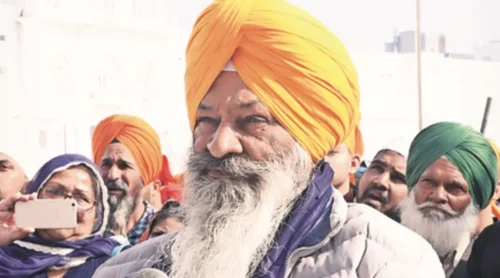
The Akal Takht, established by Guru Hargobind in 1606, is regarded as the highest temporal authority of the Sikh Panth. Throughout Sikh history, the Akal Takht has exercised its authority by issuing religious directives and imposing “tankhah” (religious punishment) on individuals found guilty of violating Sikh principles.
This tradition has not been limited to ordinary Sikhs. Prominent political leaders, religious figures and even institutions have, at different times, been summoned before the Akal Takht and asked to seek forgiveness. The purpose of tankhah is not merely punitive; it is intended as a process of repentance and re-entry into the Sikh fold
One of the most controversial recent cases involved senior Shiromani Akali Dal leader and former Punjab minister Sucha Singh Langah. In 2017, after being booked in a rape case and amid the circulation of an objectionable video, Langah was excommunicated by the Akal Takht. Sikh high priests held that his conduct had damaged the image of the Sikh community.
Five years later, in November 2022, Langah appeared before the Akal Takht with folded hands and sought forgiveness. Accepting his apology, the then acting Jathedar, Giani Harpreet Singh, awarded him tankhah. Langah was directed to perform seva in the Golden Temple’s langar, clean utensils, listen to kirtan and publicly acknowledge his mistake before the Sikh sangat. He was also barred from becoming a member of any SGPC gurdwara committee for five years. The decision paved the way for his reinstatement in the Sikh fold.
The Langah case remains controversial because critics argue that a leader facing serious allegations and associated with a scandalous video was eventually readmitted after religious punishment, while supporters maintain that Sikh tradition allows repentance and forgiveness after an individual accepts wrongdoing and performs the prescribed tankhah.
The debate has resurfaced in contemporary Punjab politics whenever the Akal Takht takes action against political leaders. Critics often question whether standards are applied uniformly, citing past cases such as Langah’s. Supporters of the institution respond that every case is decided according to its own facts and circumstances by the Sikh high priests.
Regardless of political viewpoints, the Sucha Singh Langah episode remains one of the most significant examples in recent years of how the Akal Takht has exercised its traditional authority to excommunicate, punish and subsequently restore a prominent political figure within the Sikh community.
Disclaimer: This article and accompanying images are for informational and illustrative purposes only. Some visuals may be AI-generated or digitally enhanced and may not depict actual events or persons. Views expressed are based on publicly available information and analysis.