
 Pakistan’s Evacuee Trust Property Board (ETPB) serves as the primary governmental custodian for Hindu temples (mandirs) and related properties abandoned by the Hindu community during the 1947 Partition. Established under frameworks dating back to the 1950s and formalized in the 1975 Act, the ETPB manages evacuee trust assets—including lands, urban properties, and religious sites—for both Hindus and Sikhs. Its responsibilities encompass maintenance and restoration of temples, facilitation of festivals and pilgrimages, leasing of properties to generate revenue for upkeep, and coordination of religious tourism. This mirrors its role with Sikh gurdwaras, though Hindu sites face distinct challenges due to the smaller remaining Hindu population in many regions.
The Pakistan Hindu Mandir Management Committee (PHMMC), formed in late 2021 by the Ministry of Religious Affairs and Interfaith Harmony, provides a dedicated community-led layer of oversight modeled on the Pakistan Sikh Gurdwara Prabandhak Committee (PSGPC). Headed by figures such as Krishna Sharma, with members including Dewan Chand Chawla and others, the committee acts as a bridge between the Hindu community and the state. It focuses on matters related to Hindu places of worship, advocating for their protection and proper management while working in coordination with the ETPB. This body represents an effort to give Hindus greater voice in temple affairs compared to earlier arrangements where ETPB held more centralized control.
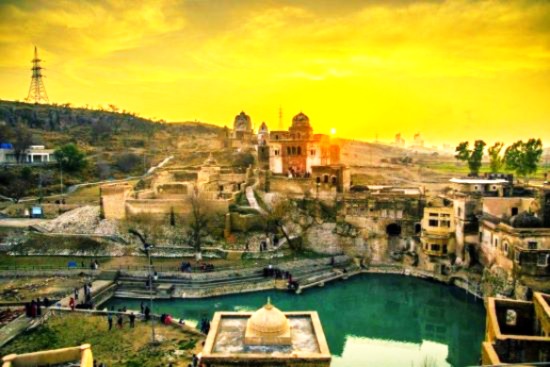
Pakistan is home to over 1,200 Hindu worship sites (with estimates around 1,285) alongside hundreds of gurdwaras, but only a fraction—recent parliamentary data suggested around 37 functional temples—are actively maintained and used. Many sites have fallen into disuse due to the small local Hindu population and historical neglect. Prominent examples include the ancient Katas Raj Temples complex in Punjab (linked to Mahabharata legends and dedicated to Shiva) and the Shri Hinglaj Mata Mandir in Balochistan, a major Shakti Peetha that draws pilgrims from across the subcontinent despite regional challenges. Other notable sites involve ongoing or recent restoration efforts, such as the Baoli Sahib temple in Zafarwal (reconstruction started after decades of disuse) and the Valmiki Temple in Lahore (reclaimed from illegal occupants).
Management involves practical steps like ETPB-led repairs, festival organization, and pilgrim facilitation where possible. Revenue from leased evacuee lands and properties supports temple maintenance and related services. However, the system has faced persistent criticisms, including allegations of mismanagement, illegal encroachments on temple lands by influential parties, and insufficient Hindu representation in decision-making bodies. Historical concerns have included land grabbing, lack of development at many sites, and calls for appointing Hindu leadership within the ETPB to better protect community interests.
Recent developments show some positive momentum. The ETPB and government have undertaken restoration projects, such as reopening long-sealed ancient temples and initiating construction at neglected sites. The creation of the PHMMC signals an intent to strengthen community involvement. Major pilgrimages, particularly to Hinglaj Mata, continue to highlight the cultural significance of these sites, though broader access and preservation remain works in progress amid Pakistan’s small Hindu population (concentrated in Sindh and parts of Punjab) and occasional security or administrative hurdles.
In essence, Hindu temple management in Pakistan operates through a government-community partnership centered on the ETPB and the newer PHMMC. While legal frameworks exist for protection and some restoration successes are evident, challenges like neglect, encroachments, and limited functionality at many sites underscore the need for sustained transparency, community empowerment, and international or bilateral support for heritage preservation. These efforts are vital for safeguarding Pakistan’s ancient Hindu architectural and spiritual legacy, much of which shares deep historical ties with the broader Punjabi and South Asian cultural fabric.
Disclaimer: This article and accompanying images are for informational and illustrative purposes only. Some visuals may be AI-generated or digitally enhanced and may not depict actual events or persons. Views expressed are based on publicly available information and analysis.