
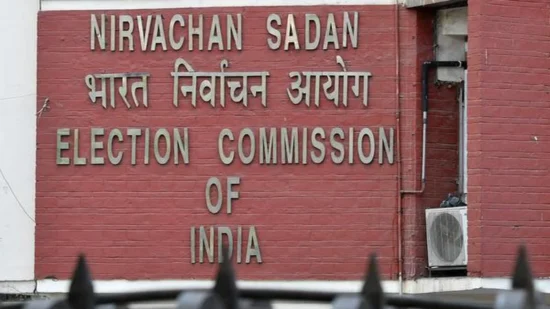
 NEW DELHI: The controversy surrounding Chief Election Commissioner Gyanesh Kumar and the functioning of the Election Commission of India (ECI) has entered a new phase, with reported differences within the three-member poll panel, legal challenges concerning the Special Intensive Revision (SIR) of electoral rolls, and preparations by Opposition parties to seek Kumar’s removal.
The latest controversy centres on the manner in which the Election Commission has handled electoral-roll revision, including the addition, deletion and restoration of voters. A recent investigation by The Indian Express reported that Election Commissioners Sukhbir Singh Sandhu and Vivek Joshi recorded formal objections on at least 14 occasions over a period of about 10 months. The objections reportedly concerned decisions and orders connected with voter registration, deletion of names, electoral-roll software and the administration of the SIR exercise.
The objections have assumed particular significance because the Election Commission is a three-member constitutional body. Under the Chief Election Commissioner and Other Election Commissioners (Appointment, Conditions of Service and Term of Office) Act, 2023, the Commission’s business is, as far as possible, to be conducted unanimously; where the Commissioners differ, decisions are taken according to the majority view. The CEC is therefore not legally structured as a sole decision-maker over the other Commissioners.
Timeline: How the CEC Controversy Developed
2023 — New appointment law: Parliament enacted the Chief Election Commissioner and Other Election Commissioners Act, 2023, establishing a new statutory framework for the appointment, service conditions and tenure of the CEC and Election Commissioners. The law replaced the earlier appointment arrangement and became central to later legal challenges concerning the composition of the selection panel.
March 2024 — Gyanesh Kumar joins the Election Commission: Gyanesh Kumar was appointed as an Election Commissioner along with Sukhbir Singh Sandhu. Their appointments were made under the new 2023 framework. The appointment process itself subsequently became the subject of political and legal debate.
February 2025 — Kumar becomes CEC: Gyanesh Kumar was elevated to Chief Election Commissioner on February 19, 2025, succeeding Rajiv Kumar. The Election Commission thereafter functioned with Kumar as CEC and Sukhbir Singh Sandhu and Vivek Joshi as the other two Election Commissioners. The ECI’s official record lists Rajiv Kumar as CEC until February 18, 2025.
June 2025 — Bihar SIR begins: The Election Commission began the Special Intensive Revision of electoral rolls in Bihar, which later became the basis for a much wider national debate over voter verification, deletion and restoration of names. According to the Indian Express investigation, the exercise was subsequently extended to numerous States and Union Territories.
Late 2025 to 2026 — Internal objections emerge: According to documents reviewed by The Indian Express, Sandhu and Joshi raised repeated objections over various decisions during the following months. The issues included electoral-roll management, new-voter registration, changes to Form 6 and the increasing centralisation of electoral-roll technology and databases.
April 2026 — Concerns over ECI communications: Sandhu reportedly told senior Commission officials that communications issued in the name of the ECI should have the approval of the Commission in accordance with the 2023 law. The report said the issue reflected broader disagreement over how decisions and communications were being authorised.
July–August 2026 — Form 6 dispute: A major point of contention involved changes to Form 6, the application used by citizens seeking registration as voters. According to the Indian Express investigation, the revised process required applicants to respond to a question connected with the electoral roll of the last SIR. Sandhu had earlier raised objections to the change, and on August 13 reportedly described it as “unauthorised and illegal” and called for its removal.
August 2026 — Electoral software concerns: The two Election Commissioners also reportedly raised concerns about changes to the allocation and control of the Election Commission’s information-technology systems. The Indian Express reported that the Commissioners approached the Cabinet Secretary over concerns relating to oversight and the integrity of the electoral-roll software.
September 9, 2026 — Full Commission meeting: The three Election Commissioners held a full meeting on September 9, according to the Indian Express. The report described this as their first full meeting in four months, against the backdrop of the internal objections.
September 14–16, 2026 — Bhutan visit: Despite the controversy emerging around the functioning of the Commission, CEC Gyanesh Kumar undertook a three-day official visit to Bhutan from September 14 to 16. According to the Press Information Bureau, he met Bhutan’s King, attended the country’s National Voters’ Day programme and held an interaction with senior officials.
September 23, 2026 — Supreme Court split verdict on appointment law: The Supreme Court delivered a split opinion on petitions challenging the 2023 law governing appointments to the Election Commission, particularly the exclusion of the Chief Justice of India from the selection panel. The matter is to be considered by a larger bench.
September 24, 2026 — Removal demand gains momentum: Opposition parties began preparing a fresh move seeking the removal of CEC Gyanesh Kumar, with reports saying a notice could be submitted in both Houses of Parliament. This development followed the disclosure of the internal objections by the two Election Commissioners.
September 25, 2026 — Supreme Court plea filed: A fresh petition was filed in the Supreme Court challenging alleged unilateral decisions associated with the electoral-roll revision process. The petitioner has sought an SIT investigation into the alleged deletion of around 13 crore names from electoral rolls, restoration of the earlier Form 6 and other reliefs. These are allegations and requests made in the petition and have not been established by a court.
September 25, 2026 — 14 internal objections reported: The Indian Express published an investigation detailing what it described as at least 14 formal objections recorded by Sandhu and Joshi over roughly 10 months. The report said the objections concerned voter additions and deletions, electoral-roll software, work allocation and other aspects of the SIR process. The newspaper also reported that questions sent to the ECI seeking its response had not received a response at the time of publication.
September 25, 2026 — CEC programmes postponed: The Election Commission postponed two youth voter-awareness programmes involving Gyanesh Kumar in Meerut and Varanasi. Commission sources said the postponement was routine and unrelated to the controversy, citing logistical issues, local conditions or other official commitments.
The Central Question: Who Decides Inside the Election Commission?
The latest dispute has brought an important institutional question into public focus: how should a three-member constitutional Commission function when its members disagree over major administrative and electoral decisions?
The reported objections by two Commissioners do not, by themselves, establish that any decision was unlawful. However, they raise questions about internal procedures, transparency, decision-making authority and the safeguards surrounding electoral-roll management. The 2023 law provides for majority decision-making when the Commissioners differ, while also stating that Commission business should, as far as possible, be conducted unanimously.
The SIR Question and Millions of Voter Names
The Special Intensive Revision has become the largest point of controversy surrounding the current ECI. According to the Indian Express investigation, the draft-roll process across 30 States and Union Territories involved more than 13 crore names being struck from draft voter rolls. The figure concerns the draft-roll exercise and should not automatically be interpreted as 13 crore permanently disenfranchised voters; the status of names can involve verification, claims, objections and restoration procedures.
The issue is particularly sensitive because electoral-roll revision directly affects a citizen’s ability to exercise the constitutional right to participate in elections. Questions over how names are added, removed or restored therefore go beyond an ordinary administrative dispute and touch upon public confidence in the electoral process.
What Happens Next?
The controversy is now moving simultaneously through several institutions. Parliament may see a proposed removal motion against the CEC, while the Supreme Court is dealing with challenges concerning both the appointment framework and aspects of the electoral-roll process. At the same time, questions are being raised inside the Election Commission itself.
Any removal motion against a CEC faces a particularly high constitutional threshold. Article 324 provides that the CEC can be removed only in the same manner and on the same grounds as a Supreme Court judge. The process therefore involves Parliament and requires the constitutional standard of proved misbehaviour or incapacity rather than simply political disagreement over the Commission’s decisions.
The immediate issue, therefore, is not simply the political confrontation surrounding Gyanesh Kumar. It is whether the Election Commission can demonstrate that its electoral-roll decisions are being taken through transparent, legally authorised and properly documented procedures, and whether citizens whose names are affected by the SIR process have meaningful mechanisms to challenge and correct errors.
For the Election Commission, the credibility of the electoral process depends not only on the final election result but also on public confidence in the voter list, the technology used to maintain it and the institutional process through which decisions are made. The coming parliamentary and judicial proceedings are likely to determine how the present dispute develops and whether the reported internal disagreements lead to changes in the Commission’s procedures.
Disclaimer: This article and accompanying images are for informational and illustrative purposes only. Some visuals may be AI-generated or digitally enhanced and may not depict actual events or persons.Views expressed are based on publicly available information and analysis