
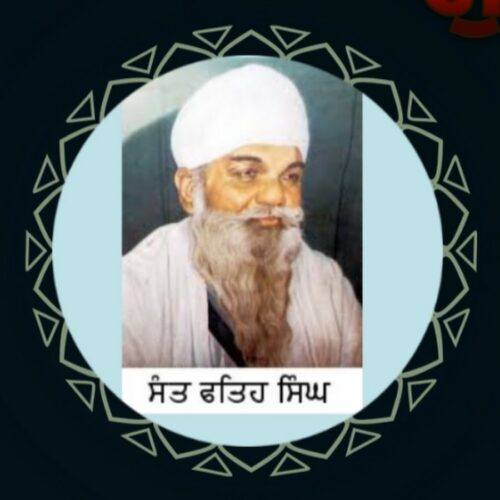
 The history of Punjab politics is deeply connected with the struggles, sacrifices, and leadership battles within the Sikh community after India’s independence. Among the most influential figures of that period was Sant Fateh Singh, who played a major role in the Punjabi Suba movement and eventually emerged as one of the most powerful Sikh political leaders of his time. Supporters remember him as a determined religious and political leader who helped secure a Punjabi-speaking state, while critics argue that his rise to power also marked the beginning of corruption, favoritism, and “chaplusee” (sycophancy) in modern Punjabi politics.
The political battle between Master Tara Singh and Sant Fateh Singh during the late 1950s and early 1960s is often described as a turning point in the internal culture of the Shiromani Akali Dal and Sikh religious institutions. Before this era, many traditional Akali leaders projected themselves as ideological workers devoted to Panthic principles, public service, and Sikh causes. Politics was strongly linked with sacrifice, imprisonment, and mass movements. However, critics claim that after Sant Fateh Singh consolidated his influence, political loyalty to an individual gradually became more important than ideological commitment to the Panth.
According to many traditionalist Akali thinkers, the struggle for control over the Shiromani Gurdwara Parbandhak Committee (SGPC) and the Akali Dal changed the nature of Sikh politics. They argue that younger leaders who were personally loyal to Sant Fateh Singh began receiving greater opportunities, election tickets, and positions of influence. This allegedly weakened the old culture of open debate and independent thinking. Political survival increasingly depended on staying close to powerful leaders instead of serving ordinary party workers or the Sikh community. Over time, critics believe this system encouraged flattery, blind loyalty, and factional politics.
The accusation of “chaplusee culture” in Punjab politics did not remain limited to one political party. Observers argue that once the practice of rewarding personal loyalty became normalized, it slowly spread across multiple political organizations in Punjab. Leaders started surrounding themselves with individuals who praised them instead of offering honest criticism. As a result, internal democracy weakened, and many capable grassroots workers found themselves sidelined. Political careers often depended more on proximity to leadership than on public credibility or administrative ability.
Another major criticism associated with Sant Fateh Singh’s period is the alleged political use of SGPC resources. Opponents argue that religious institutions gradually became deeply entangled with electoral politics. The SGPC, originally intended primarily for the management of Sikh gurdwaras and religious affairs, increasingly became a center of political mobilization. Critics claim that SGPC funds, influence, and institutional machinery started being used indirectly for political campaigns and legislative battles. This trend, according to political analysts, created long-term confusion between religious administration and political power in Punjab.
Supporters of Sant Fateh Singh, however, strongly reject these allegations. They argue that he operated during an extremely turbulent political period when Sikhs were struggling for linguistic and cultural recognition within India. According to them, strong centralized leadership was necessary to keep the Punjabi Suba movement united against political opposition from the central government and rival factions. They also point out that political favoritism and sycophancy are not unique to one leader or one party but are common problems across Indian politics.
The creation of the Punjabi-speaking state in 1966 remains one of the defining achievements associated with Sant Fateh Singh’s leadership. Many Sikh historians believe that without his mass mobilization, fasting campaigns, and religious influence, the Punjabi Suba movement might not have succeeded. Yet, even among those who acknowledge his contribution, there remains an ongoing debate about whether the methods used during his rise to power unintentionally changed the ethical foundations of Punjab’s regional politics.
Over the decades, Punjab politics has repeatedly witnessed accusations of corruption, personality cults, misuse of institutions, and blind loyalty toward powerful leaders. Many critics trace the roots of these practices back to the political restructuring that occurred during the Sant Fateh Singh era. Others believe that broader social and political developments after independence were responsible, and that blaming one individual oversimplifies a much larger historical transformation.
Today, the debate surrounding Sant Fateh Singh’s legacy continues to divide political observers, Sikh intellectuals, and historians. For some, he remains a heroic architect of Punjabi identity and Sikh political assertion. For others, his period symbolizes the beginning of a political culture where loyalty to individuals gradually overtook transparency, merit, and institutional integrity. Regardless of which interpretation one accepts, there is little doubt that the power struggle between Sant Fateh Singh and Master Tara Singh permanently shaped the future direction of Punjab politics and Sikh institutions for generations to come.
Disclaimer: The photographic elements used in the accompanying graphic are for symbolic and illustrative purposes only. The individuals depicted do not imply actual endorsement, involvement, or association with substance