
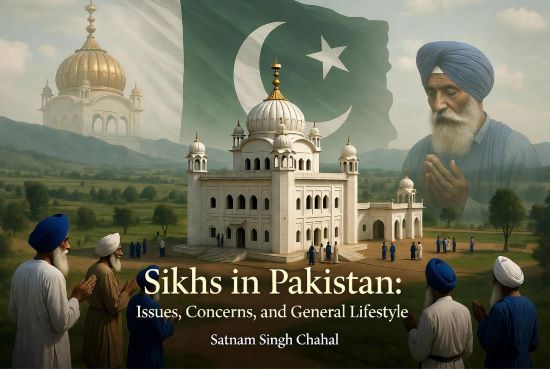
The Sikh community in Pakistan, though small in number, occupies a place of immense historical and religious significance. Pakistan is home to some of Sikhism’s holiest sites, including the sacred city of Nankana Sahib, the birthplace of Guru Nanak Dev Ji, and Kartarpur Sahib, where the first Sikh Guru spent the final years of his life. As a result, Pakistan holds a special place in the hearts of Sikhs around the world. Despite this deep spiritual connection, the Sikh community living in Pakistan faces a unique set of social, economic, and political challenges.
The Sikh population in Pakistan is estimated to range between 20,000 and 40,000 people, although exact numbers are difficult to determine due to limited census data. Most Pakistani Sikhs reside in the provinces of Punjab and Khyber Pakhtunkhwa, particularly in cities such as Lahore, Nankana Sahib, Peshawar, and Hasan Abdal. A significant number of Sikhs in Pakistan are descendants of families who remained after the Partition of 1947, while others migrated from neighboring Afghanistan over the past several decades due to war and instability there.
The general lifestyle of Sikhs in Pakistan varies depending on their region and economic status. Many Sikh families are engaged in business, trade, retail shops, transportation, agriculture, and professional services. In urban areas, Sikh entrepreneurs have established themselves in sectors such as pharmaceuticals, import-export, and small-scale industries. The community places a strong emphasis on education, and increasing numbers of Sikh youth are pursuing higher studies and professional careers.
Religion remains central to the daily lives of Pakistani Sikhs. Gurdwaras serve not only as places of worship but also as community centers where social and cultural traditions are preserved. Major Sikh festivals such as Vaisakhi, Guru Nanak Gurpurab, and other religious occasions are celebrated with great enthusiasm. These events often attract pilgrims from India and other countries, strengthening ties between Sikhs worldwide and the historic Sikh heritage sites located in Pakistan.
One of the most significant developments in recent years has been the opening of the Kartarpur Corridor in 2019. This initiative allows Indian Sikh pilgrims to visit Gurdwara Darbar Sahib Kartarpur without requiring a visa. The corridor has been widely welcomed by Sikhs across the globe and is viewed as an important step toward preserving religious heritage and promoting people-to-people contact between India and Pakistan.
Despite these positive developments, Sikhs in Pakistan continue to face several challenges. Security remains a major concern, particularly in Khyber Pakhtunkhwa, where members of the Sikh community have occasionally been targeted by extremist groups. Incidents of violence against Sikh traders and community leaders in past years have raised concerns about the safety of religious minorities. Although the Pakistani government has increased security measures around major gurdwaras and Sikh neighborhoods, apprehensions remain.
Religious freedom is another area of concern. While the Constitution of Pakistan guarantees the right to practice religion, Sikhs and other minorities sometimes face social discrimination and prejudice. Reports of forced conversions, though more commonly associated with other minority communities, have also generated concerns among human rights organizations. Ensuring equal rights and protection for minorities remains an important challenge for Pakistan’s democratic institutions.
The preservation and management of Sikh heritage sites also remain important issues. Following the Partition of 1947, many historic gurdwaras fell into neglect or were repurposed. In recent years, however, the Pakistani government and religious authorities have undertaken restoration projects for several historic Sikh shrines. These efforts have been appreciated by the global Sikh diaspora, though calls continue for greater preservation of Sikh heritage across the country.
Political representation of Sikhs in Pakistan is limited due to their small population. Nonetheless, some Sikh individuals have held positions in provincial assemblies and government institutions, reflecting gradual progress toward inclusion. Community leaders continue to advocate for greater representation in policymaking bodies and equal opportunities in public service.
Education and cultural preservation present additional challenges. Many Pakistani Sikhs seek to preserve Punjabi language and Gurmukhi script, which are essential to Sikh religious and cultural identity. However, opportunities for formal instruction in Gurmukhi remain limited, making it difficult for younger generations to maintain a strong connection with their literary and religious traditions.
Relations between Sikhs and the broader Pakistani society are generally peaceful and cordial. In many areas, Sikh families live harmoniously alongside Muslim neighbors and actively contribute to local economies. Instances of interfaith cooperation and participation in social activities demonstrate the potential for communal harmony. However, as with minority communities in many countries, concerns regarding discrimination and equal treatment continue to exist.
In conclusion, the Sikh community in Pakistan represents a resilient and historically significant minority. While Pakistan’s sacred Sikh shrines make the country central to Sikh history and spirituality, the community continues to navigate challenges related to security, representation, and cultural preservation. Positive initiatives such as the Kartarpur Corridor and the restoration of historic gurdwaras have fostered optimism, but sustained efforts toward minority rights, religious freedom, and social inclusion are essential for ensuring a secure and prosperous future for Sikhs in Pakistan.
Quick Overview of the Topic
• Population & Heritage: Around 16,000 Sikhs (per 2023 census) live in Pakistan, a tiny minority (0.01%). Many historic sites like Gurdwara Janam Asthan in Nankana Sahib (Guru Nanak’s birthplace) and Kartarpur Sahib remain vital pilgrimage centers.
• General Lifestyle: Concentrated in Punjab (Nankana Sahib), Khyber Pakhtunkhwa (Peshawar), and Sindh. Many maintain Sikh traditions — langar, prayers, turban/beard — while integrating with local Muslim communities in places like Peshawar. Occupations include farming, small trade, and business. Some areas show harmony, but overall numbers have dwindled dramatically since Partition.
• Issues & Concerns:
• Security & Violence: Targeted killings (e.g., shopkeepers in Peshawar), attacks on minorities.
• Forced Conversions & Abductions: Particularly affecting Sikh women and girls reports of kidnapping, forced marriage/conversion, with limited legal protection.
• Discrimination & Rights: Restrictions (e.g., on kirpan), poverty, low education levels, property issues, and societal bias. Many live modestly, with calls for better safeguards.
• Cultural Preservation: Efforts to protect gurdwaras and heritage amid a declining population.