
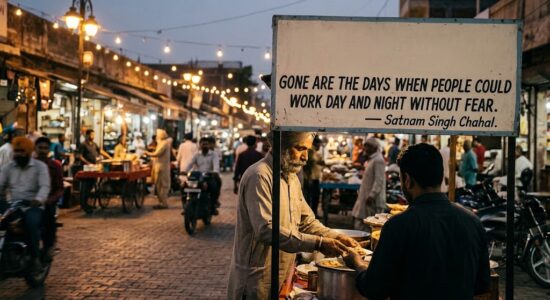
 There was a time when people could leave their homes early in the morning, work late into the night, return from their workplaces after midnight and carry out their daily business without constantly looking over their shoulders. Shopkeepers could close their shops late, farmers could work in their fields, transport workers could travel at night, and ordinary citizens could move freely without living under the shadow of fear. Today, however, many people feel that the sense of security they once enjoyed is gradually disappearing. The growing fear of crime, threats, extortion, shootings and other violent incidents has raised serious questions about the state of law and order.
Gone are the days when hard work alone was enough to build a secure life. Today, people are increasingly concerned not only about earning their livelihood but also about protecting their lives, families and property. When a businessman worries about receiving threatening calls, a shopkeeper fears a robbery, a family hesitates to travel after dark, or a worker is afraid to return home late at night, the problem goes beyond individual crime. It becomes a question of public confidence in the government’s ability to protect its citizens.
Law and order is not merely a slogan used during elections. It is the foundation of a peaceful society, a functioning economy and public trust in democratic institutions. People pay taxes, follow the law and expect the government and police to provide security without discrimination. When citizens begin to believe that criminals can operate without fear while law-abiding people must live cautiously, the credibility of the entire system comes under pressure.
The police have a critical responsibility in this situation. Effective policing requires timely action, professional investigations, intelligence gathering, visible patrolling and accountability at every level. Criminals must face the consequences of their actions through due legal process, while innocent people must be protected from harassment and arbitrary treatment. Announcements, press conferences and claims of successful operations cannot replace measurable improvements in public safety.
The government, too, must accept responsibility for ensuring that law and order remains a priority. Political leaders cannot treat every criticism as an attempt to malign the state. When citizens raise concerns about insecurity, their voices deserve serious attention rather than political arguments. The real test of governance is not how confidently leaders describe the situation but whether ordinary people actually feel safer in their homes, workplaces, villages, towns and cities.
The economic consequences of insecurity can also be serious. Businesses require a stable environment to operate, investors need confidence, and workers must be able to earn their livelihoods without intimidation. If entrepreneurs feel unsafe, families fear for their children, and young people lose confidence in the future, the damage extends beyond individual incidents. It can weaken employment, discourage investment and undermine the social fabric of the state.
At the same time, the public must avoid rumours, unverified allegations and the tendency to blame entire communities for the actions of individuals. Crime must be investigated on the basis of evidence, and justice must be delivered through the courts. A strong law-and-order system protects everyone equally, regardless of political influence, financial status, religion or social background.
The most important question is simple: Can an ordinary citizen live, work and travel without fear? If the answer is increasingly uncertain, the authorities must examine the reasons honestly and take corrective action without delay. People do not expect a crime-free society overnight, but they do expect a government that takes their concerns seriously, responds promptly and holds those responsible for criminal activity accountable.
The time has come to move beyond political promises and focus on the everyday reality faced by ordinary people. Security should not be a privilege reserved for influential individuals or those with political connections. It is a basic responsibility of the state and a fundamental expectation of every citizen.
A government may make countless claims about development, investment and progress, but progress loses its meaning when people are afraid to work, travel or return home safely. The real measure of good governance is a society in which honest citizens can earn their living with dignity, businesses can operate without intimidation, and families can sleep peacefully knowing that the law stands firmly on their side.
The days when people could work day and night without fear should not remain merely a memory. Restoring that confidence must become an urgent priority for every authority responsible for public safety. Citizens deserve security, accountability and peace of mind—not just assurances.
Punjab Outlook — Independent Journalism. Public Interest. Punjabi Perspective.