
 The media is often called the fourth pillar of democracy because it acts as a bridge between the government and the people. A strong and fearless media exposes corruption, raises the voice of ordinary citizens, and keeps those in power accountable. In a democratic society like Punjab, journalists are expected to work independently without fear, pressure, or harassment. However, in recent years, serious concerns have been raised regarding the safety, freedom, and working conditions of media persons in Punjab and across India.
Many journalists today claim that they are facing increasing pressure for reporting uncomfortable truths. Several media organisations, press clubs, and journalist unions have condemned incidents involving FIRs, police action, intimidation, cyber complaints, and alleged misuse of legal machinery against journalists and digital content creators. Reports published in 2026 highlighted concerns about independent journalists in Punjab alleging censorship, harassment, and pressure for critical reporting.
The issue is not limited to mainstream media alone. Independent YouTubers, digital reporters, RTI activists, and local journalists working in villages and small towns are also facing difficulties. In many cases, local reporters covering corruption, illegal activities, poor infrastructure, drug trafficking, or political favouritism become targets of threats and harassment. One recent report from Phagwara mentioned a violent assault on a journalist outside his residence, leading to serious injuries. Another case from Ludhiana described an alleged mob attack on a digital journalist after reporting on poor infrastructure work.
One of the biggest concerns is the growing fear among journalists that speaking against influential people may invite legal notices, online trolling, police complaints, or social pressure. Media organizations and press unions have repeatedly stated that criticism of the government should not be treated as a crime. A democracy survives only when journalists can ask difficult questions freely and independently.
The harassment faced by journalists is not always physical. Mental pressure, online abuse, defamation campaigns, and economic insecurity are also major problems. Female journalists especially face targeted online abuse and intimidation. International reports have also shown that women journalists worldwide increasingly face threats and harassment simply for doing their professional duty.
Another major issue is the economic condition of media workers. Many local reporters work with low salaries, without insurance, legal protection, or job security. Small-town journalists often travel long distances at personal expense to cover public issues. Despite these hardships, they continue reporting because journalism is not merely a profession but a public service. Unfortunately, when journalists themselves become victims, society often remains silent.
Punjab has also witnessed growing debates about press freedom and democratic values. Several press clubs and journalist unions have publicly condemned actions against reporters and warned that attempts to silence the media weaken democracy itself. The concern is that if journalists stop asking questions due to fear, corruption and misuse of power may grow unchecked.
The role of media becomes even more important in Punjab because the state faces several sensitive issues including drugs, unemployment, corruption, gang violence, farmer concerns, illegal mining, and migration. Journalists who investigate these matters are performing a duty toward society. Instead of intimidation, they deserve protection and encouragement.
At the same time, the media also has responsibilities. Journalism must remain truthful, ethical, and balanced. Fake news, sensationalism, and paid propaganda damage public trust. Responsible journalism requires facts, fairness, and accountability from both the media and those in power. A healthy democracy needs both a free press and responsible reporting.
Across India, discussions about press freedom continue to grow. Public discussions on social media and community forums increasingly reflect concerns about shrinking media independence and pressure on journalists. Whether one agrees fully or not, these discussions show that citizens care deeply about the condition of democracy and the freedom of expression.
The need of the hour is unity and support for journalists who become victims of threats or harassment. Civil society, political parties, legal institutions, and ordinary citizens must stand together to protect the dignity and safety of media persons. Democracy becomes weak when journalists are silenced, but it becomes stronger when truth can be spoken fearlessly.
A free media is not an enemy of the government. It is the mirror of society. Breaking that mirror will never solve the problems hidden behind it.
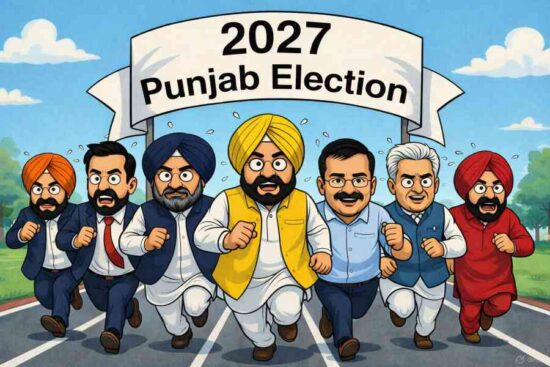
“Disclaimer: The photographic elements used in the accompanying graphic are for symbolic and illustrative purposes only. The individuals depicted do not imply actual endorsement, involvement, or association with substance