
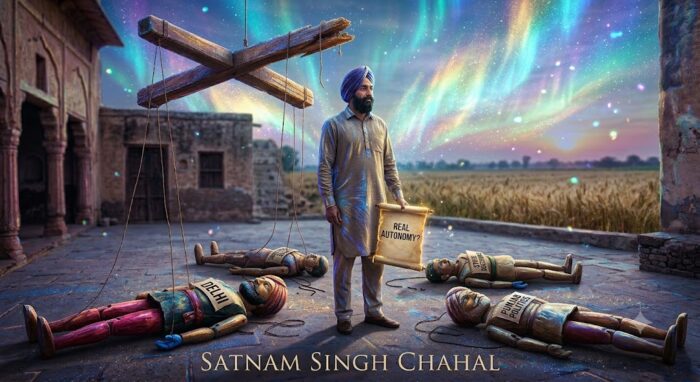
 Punjab’s politics has long carried a sense of frustration among sections of its population over how decisions are made and where political authority actually lies. The concern often raised is that major political parties operating in the state—whether the Aam Aadmi Party, Bharatiya Janata Party, or the Indian National Congress—are ultimately guided by leadership structures based in Delhi rather than being fully rooted in Punjab’s own regional decision-making ecosystem. This perception has created an ongoing debate about whether Punjab’s political autonomy within its own governance framework is strong enough or overly influenced by national-level priorities.
At the core of this discussion is India’s federal structure, where states do have constitutionally defined powers, but political parties themselves are largely centralized organizations. In practice, this means that strategic decisions—such as candidate selection, alliance formation, and policy positioning—are often shaped by national leadership. As a result, even when state leaders are visible and active, the final direction of the party frequently reflects considerations that extend beyond Punjab’s immediate social and economic realities.
Critics argue that this arrangement creates a disconnect between local aspirations and political decision-making. Punjab has unique challenges, including agriculture dependence, water disputes, drug abuse concerns, unemployment pressures, and cross-border security sensitivities. When policy priorities are set at a national level, some feel these region-specific issues do not always receive the depth of attention they require. This leads to the perception that governance is being “managed from outside,” even though administrative authority formally rests with the elected state government.
On the other hand, supporters of the current system argue that linking state politics to national parties ensures stability, broader resources, and integration with national development programs. They point out that no Indian state operates in complete political isolation, and coordination between state and central leadership is necessary for funding, infrastructure projects, and national security coordination. From this perspective, Delhi-based leadership is not necessarily interference, but part of a unified democratic framework.
However, the question raised by many observers is not about legality but about representation and responsiveness. If political parties in Punjab are perceived as extensions of distant power centers, it can weaken trust in local leadership and reduce the sense of political ownership among citizens. This perception becomes more significant in a state like Punjab, which has a strong historical identity, cultural distinctiveness, and a legacy of political activism.
Ultimately, the issue is less about whether Punjab can “rule itself” in a constitutional sense, and more about how effectively its political system reflects local voices. Strengthening internal party democracy, empowering state leadership, and ensuring that regional concerns are not overshadowed by national agendas may help bridge this gap. The debate, therefore, is not a rejection of the federal system, but a call for a more balanced relationship between Delhi’s political centers and Punjab’s grassroots realities.
Punjab Politics and the Question of Real Autonomy: Are State Decisions Still Controlled from Delhi?
Disclaimer: The photographic elements used in the accompanying graphic are for symbolic and illustrative purposes only. The individuals depicted do not imply actual endorsement, involvement, or association with substance