
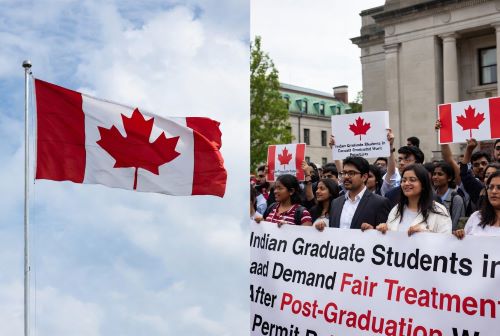
 Hundreds of Indian students have taken to the streets in Canada, particularly in Alberta, protesting what they describe as an abrupt and unfair denial of their Post-Graduation Work Permit (PGWP) applications. The demonstrations, which have included rallies and hunger strikes, reflect growing frustration among international graduates who say they invested their savings and years of their lives in Canada with the expectation of gaining valuable work experience after completing their studies.
The protests intensified after many graduates, including a significant number of Indian nationals, received refusals for PGWPs despite believing they had enrolled in programs that met the eligibility criteria. Students argue that they followed the rules in place when they began their education and should not be penalised for subsequent clarifications or changes in immigration policy. Canadian immigration authorities, however, maintain that the eligibility requirements have not fundamentally changed and that each application is assessed according to the law.
In Calgary, affected students have organised peaceful demonstrations, carrying placards reading, “We Studied Here, We Deserve to Work Here.” Some protesters have launched hunger strikes, saying they have exhausted every other avenue to have their concerns heard. They claim they spent tens of thousands of dollars in tuition fees, living expenses, and travel costs based on the understanding that graduation would provide a pathway to Canadian work experience and, potentially, permanent residency.
Many of the protesting students say they borrowed heavily from families or financial institutions in India to finance their Canadian education. They now fear that without work permits, they will be forced to return home burdened with debt and without the career opportunities they had anticipated. For many families, sending a child to Canada represented a life-changing investment and a hope for a better future.
The controversy has also raised questions about the role of educational institutions. Students argue that colleges aggressively marketed their programs to international applicants while emphasizing post-study employment opportunities. Some believe institutions should have provided clearer information regarding program eligibility and evolving immigration requirements. In response, colleges have stated that immigration decisions rest solely with the federal government and have encouraged affected students to seek legal advice while retaining all relevant documents.
Canadian political leaders have responded cautiously. Alberta Premier Danielle Smith stated that students whose visas have expired and who do not qualify for work permits cannot legally remain in Canada, emphasizing that immigration laws must be enforced consistently. The remarks drew criticism from protesters, who insist they are not asking for special treatment but for what they consider fair application of the rules under which they enrolled.
The demonstrations come as Canada continues to tighten its overall immigration system. The federal government has introduced several measures aimed at reducing the number of temporary residents, including stricter rules governing international students and foreign workers. Officials argue that these reforms are necessary to address pressures on housing, healthcare, and public services while ensuring the integrity of Canada’s immigration system.
For India’s large student community, the developments have created considerable uncertainty. India remains one of the largest sources of international students in Canada, and any significant policy shift has immediate consequences for thousands of families. Education consultants in India report that prospective students are increasingly seeking greater clarity regarding work permit eligibility before committing to study abroad.
Immigration experts note that while Canada has every sovereign right to regulate its immigration system, transparency and predictability are essential to maintaining the country’s reputation as a preferred destination for international education. They argue that students who enrolled under one set of expectations should receive timely and clear guidance whenever policies or interpretations change.
As protests continue, the affected students are urging Immigration, Refugees and Citizenship Canada (IRCC) to review their cases, provide greater transparency regarding the refusals, and establish a fair process for graduates who believe they complied with the rules when they chose Canada as their educational destination. Whether the government offers any relief remains uncertain, but the demonstrations have already reignited a national debate about the balance between immigration reform and the expectations of international students who have invested heavily in Canada’s education system.