
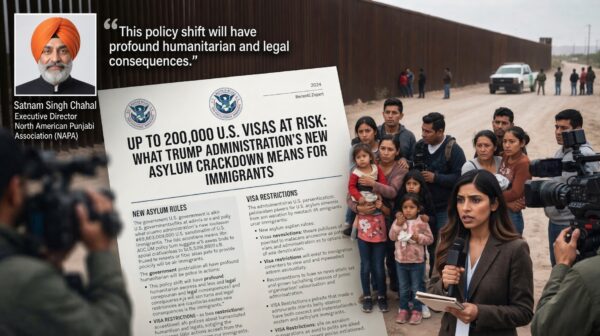
The Trump administration is preparing one of the most sweeping visa-revocation actions in modern U.S. immigration history, with up to 200,000 foreign nationals potentially affected. The proposed action would target holders of B-1 business and B-2 tourist visas who entered the United States as temporary visitors but subsequently filed, or are currently filing, applications for asylum.According to reporting by the Associated Press and PBS NewsHour, the State Department is preparing to revoke these non-immigrant visas on a rolling basis, in coordination with the Department of Homeland Security. If implemented at the scale being reported, it would represent the largest single mass visa revocation in U.S. history. The proposal is significant not simply because of the number of people involved, but because it raises fundamental questions about the relationship between temporary immigration status, the right to seek asylum and the government’s authority to revoke previously issued visas.
Who Could Be Affected?
The proposed action is expected to focus on foreign nationals who received B-1 or B-2 visas between 2016 and 2026 and subsequently sought asylum in the United States. B-1 visas are generally issued for temporary business activities, while B-2 visas are used primarily for tourism, visits and certain other temporary purposes. The administration argues that some individuals entered the country representing themselves as short-term visitors but later filed asylum claims with the intention of remaining in the United States permanently. State Department officials have described the effort as an attempt to identify and revoke visas where the government believes the original temporary purpose of the visit was inconsistent with subsequent immigration conduct. The department has indicated that the process will be conducted on a continuing, rolling basis, meaning the final number could change.
One of the most important distinctions for affected immigrants is that visa revocation is not necessarily the same thing as immediate deportation.People with pending asylum cases may lose their B-1 or B-2 non-immigrant status, but that does not automatically mean that every person affected will be physically removed from the United States immediately. Their individual immigration circumstances, pending applications and other forms of lawful or protected status could determine what happens next.This distinction is extremely important because headlines about mass visa cancellation can create fear and confusion among families who may believe that revocation automatically means an immediate removal order.The administration’s action, however, could significantly change the immigration position of affected individuals and expose some to additional enforcement proceedings.
The proposed policy forms part of a much broader Trump administration effort to tighten immigration enforcement and increase scrutiny of foreign nationals entering or remaining in the United States.Administration officials argue that the asylum system has been abused by individuals who enter the country on temporary visas and subsequently seek asylum as a means of remaining permanently. The administration has therefore increasingly focused on what it considers misuse of immigration programs and weaknesses in the asylum system.The State Department has already revoked more than 175,000 visas during the administration’s broader enforcement campaign, according to recent reporting, involving allegations including criminal conduct, visa violations and other concerns. The proposed asylum-related action would be considerably larger in scale.
Behind the statistics are potentially hundreds of thousands of individual immigration stories.Some people who entered the United States as visitors may have subsequently experienced circumstances that caused them to seek asylum. Others may have filed asylum claims after deciding that returning to their home countries could expose them to danger or persecution.U.S. asylum law exists precisely because circumstances can change and because individuals who fear persecution may seek protection in the United States.That does not mean every asylum claim is legitimate. The government has a responsibility to investigate fraudulent or abusive applications. But the larger question is whether a broad visa-revocation policy can distinguish effectively between fraudulent claims and people who genuinely qualify for protection.That question will likely become central to any legal challenge.
The development deserves particular attention from Indian and Punjabi communities in the United States because thousands of Indians travel to America every year for tourism, business, family visits and other temporary purposes.For families with relatives who entered the United States on visitor visas and later pursued asylum, the proposed policy could create substantial uncertainty.Community organizations, immigration attorneys and diaspora representatives will need to closely monitor how the policy is actually implemented, what notices are issued to affected individuals, and what legal remedies are available.It is also important that people do not rely on social media rumors. Anyone who believes they could be affected should obtain advice from a qualified U.S. immigration attorney and carefully review any official communication from the State Department, DHS or immigration authorities.
The scale of the proposal makes legal challenges highly likely. The administration’s authority to revoke visas is broad, but questions could arise concerning how the government applies that authority to people with pending asylum claims and whether adequate procedures are being followed.The issue could eventually reach federal courts, particularly if large numbers of individuals argue that the government is improperly interfering with their pending immigration proceedings or asylum protections.The broader Trump immigration agenda has already generated numerous lawsuits and judicial disputes. A policy affecting as many as 200,000 people would almost certainly attract intense scrutiny from immigration lawyers, civil-rights organizations and advocacy groups.What This Means for Current and Future Visa Applicants
The proposed policy sends a clear message: obtaining a U.S. visitor visa is increasingly being accompanied by greater scrutiny of what happens after a person enters the country.Foreign nationals should understand that a B-1 or B-2 visa is intended for temporary purposes. Individuals should also understand the immigration consequences of changing their circumstances after arrival.At the same time, people with legitimate asylum claims should not assume that the existence of a visa-revocation policy eliminates their ability to seek legal protection. Asylum is a separate area of U.S. immigration law, and individual cases must be evaluated according to their particular circumstances.
The central policy challenge for the administration will be finding the balance between immigration enforcement and individual due process.The United States has a legitimate interest in preventing fraud, protecting the integrity of its visa system and ensuring that asylum procedures are not abused. But immigration enforcement must also recognize that every case involves an individual human being with a distinct history.A blanket approach that treats every asylum applicant who once entered on a visitor visa as an immigration abuser could create serious concerns about fairness.The difference between a fraudulent asylum application and a genuine request for protection is not merely administrative. For some individuals, it can literally be a matter of personal safety.
The proposed revocation of up to 200,000 B-1 and B-2 visas should therefore be viewed as part of a much larger transformation of U.S. immigration enforcement.The administration is moving toward a system characterized by continuous scrutiny, more aggressive visa enforcement, tougher asylum policies and greater coordination between the State Department and homeland-security agencies.For immigrants and diaspora communities, the lesson is clear: immigration status can no longer be viewed as a static document. Visa holders need to understand the conditions attached to their status and seek professional legal advice before making major changes to their immigration circumstances.
For the United States, meanwhile, the challenge will be to demonstrate that stronger enforcement can coexist with the country’s longstanding legal commitment to due process and protection for people with legitimate asylum claims.If implemented fully, this proposed action could become a defining moment in America’s immigration debate. Up to 200,000 people could find their visitor visas revoked, but the ultimate significance of the policy will be determined not only by the number of visas cancelled, but by how fairly and lawfully each individual case is handled.The reported plan is still developing. The State Department has indicated that the number of revocations will remain dynamic and that implementation will occur on a rolling basis.
Disclaimer: This article and accompanying images are for informational and illustrative purposes only. Some visuals may be AI-generated or digitally enhanced and may not depict actual events or persons.Views expressed are based on publicly available information and analysis